The Outing of Instagram: Online Communities and Changing Habits
 On this hot Saturday morning, I did what I do nearly every Saturday morning. I woke up, made breakfast, then sat down to read the NYTimes. I flipped through the travel section, slightly disappointed in the lack of photos illuminating the stories and then realized - I haven't checked my Instagram today. Immediately upon realizing this, I pulled out my phone, opened the app and hit refresh. Refresh. Refresh. Nothing. So I checked for updates in the App store. Nothing. I connected my phone to my computer, wondering if the app had crashed in some weird fashion and considered deleting and reinstalling.
"Deleting "Instagram" will also delete all of its data"
All of its data!? You mean - it might erase my comments? The autofill when I type in #catsagram?! I decided the risk of doing this was too great and chose instead to seek answers. I opened Twitter and typed in #instagram. Five seconds later I had my answer - lightening from a storm had brought down Instagram's servers. Surrounding that pertinent information were sarcastic Tweets reminding everyone that, yes, they could eat their breakfast without documenting and sharing the process. Others smartly pointed out that it's ironic that nature was the cause of such a disruption in our newly formed digital habits. It was a timely reminder of just how powerful nature is - that despite our technological leaps, nature can still destroy us with its forrest fires, hurricanes, heat and draughts.
After reading through a few more Tweets, I leaned back from my computer and suddenly a brief moment of sadness washed over me. I wondered, what's my "Instagram friend" in London doing right now? Did he explore any new interesting places in the English countryside with his family? Where are my daily, mind-blowingly gorgeous photos of the South African coast? How is my friend in Brooklyn right now? Has she stumbled upon any interesting graffiti? What will my day be like if I am forced to actually live in the moment - sharing my world with just those who are physically in my presence?
While I agree that we need to be more present and respect nature, I think they're missing the bigger point. Nature is a powerful force that will always push back regardless of our technological advances. It may be punishing us for our pollution and destruction but certainly not for our advanced communication tools. But the bigger question is - do we really share just for the sake of sharing?
No - we share to become part of a community, using our photos and comments as a tool to build relationships. Like the closing of ones neighborhood bar - we're not sad because we miss the drinks. We're sad because we miss the people. And thus the world of Instagram is not a magical place for its ability to turn mundane imagery into something beautiful - it's magical because like a crystal ball - it allows me to see what they see - helping me connect with these specific people in a way that no other platform can.
Vampires & Witches - Who were they really?
Just read a post on CNN that graves with iron stakes driven through the hearts were found in Bulgaria. So basically these people were thought to be vampires and they were killed in a horrible way because of it. This reminds me of The Messenger, which I finally saw a few days ago. As I'm sure we're all familiar - Jean D'Arc is thought to have heard voices from God that guided her on how to defeat the British while the British cruelly occupied French territory. Her visions helped the army to defeat the British but because of political desires to please the English, she was burned at the stake, accused of being a witch. We've all read about "witches" being burned and now "vampires" being killed this way. One theory is that the women accused of being witches were midwives and healers, possessing more knowledge about how to heal than the male doctors who commonly resorted to blood letting. Accusing them of being witches was a way to restore power to the doctors. History is literred with tales of people being falsely accused of being some sort of mythical creature for the sole purpose of those in power, staying in power.

So I'm curious - if we establish the fact that no, these people were not witches or vampires - then what were they? Were they people who just happened to be stronger than your average citizen? Or strikingly more attractive? Did they live longer than the average person? Were they smarter than the established power? Did they choose to believe in science over religion? Or were they autistic - having trouble interacting with people but possessing an extraordinary knowledge or memory in one particular subject? Or were they schizophrenic, multiple personalities? It would be interesting to learn the scientific reasons to these longstanding myths. Any ideas?
And some more food for thought - what has been going on in the last 5 years in American culture that has gotten us suddenly so obsessed with the world of vampires and witches? Is our life so difficult now with the ongoing recession that we need to transport ourselves to another world ?
Brands: A Lesson in Western Religion
As I contemplate my next move in the advertising world, I’ve started to delve into the science and philosophies behind positioning a brand. With each client I've worked for, I've wondered, will these ads even matter if at its core, the company does not share these beliefs? A few months ago, I attended PSFK’s conference in NYC and was inspired by their collection of speakers ranging from those passing on philosophical insights to practical advice. Vikram Gandhi’s talk on “Directing “Kumaré From Illusion Comes Truth,” stood out as an eye opening look into why brands have become such an important part of our lives. And well known for being an expert on branding, Debbie Millman’s book Brand Thinking and Other Noble Pursuits compares brands to religions in the first few pages.As an art history minor who spent a semester in Florence, I realize how the history of advertising can neatly be aligned with the history of Christianity. I focus on Christianity only because I am more familiar with its history and symbolism thanks to my art history classes while abroad.
 In the beginning of Christianity, Jesus and his story were depicted through symbols. A circle, or halo was used to indicate Jesus along with other elements to indicate important people in his story. Mosaics in North Eastern Italy (Ravenna, Rimini), were featured in churches where people gathered to gain wisdom, a sense of community and direction from these images, each other and spiritual leaders. Compare this to the experience of regularly buying from a store in the 1800s. Would buying from one particular dressmaker or tailor make you seem more educated or put you in the upper class? While you felt that wearing their clothing gave you a particular sense of confidence, the key contact with the "brand" was limited to the physical location it was sold in just as the main connection with Jesus was made in a church.
Eventually, as Christianity grew in Italy, so did the experience of worshipping Jesus. Catholic Churches became more gilded, and church-goers were surrounded by painted imagery that told the story of Jesus. Through rituals and community, Christians were reassured that they were a part of something special and somehow connected to something bigger than themselves. The spread of the word of God inspired countless artwork around its stories but the ownership of the "brand of Christianity" was strictly controlled by the Catholic church.
In parallel, as brands developed in the late 1800s, so did the experiences around them. Their story was told through the in store experience and through newspaper ads. Brands helped people identify who they were and gave them a sense of belonging. Do you drive a Ford or a Mercedes? Do you smoke Camels or Marlboros? The brand images were tightly controlled by the companies that ran them. Brands developed manifestos and content; Soap Operas, The Michelin Guide, etc. but it was not a two way conversation between the brand and the consumer.
Eventually, the Catholic church became the most powerful force in Europe and started abusing its power by charging believers to have their sins forgiven. Like a company that lies to their customers because they know they can get away with it, their brand image eventually suffered. The intersection of Martin Luther's theses' against the Catholic church and invention of the printing press created a huge shift in people's relationships with Christianity. The new group of Protestants were taught that they had a direct relationship with Jesus and could read the Bible for guidance.

Fast forward to the onset of social media in our current century. Like the invention of the printing press in the early 15th Century, social media has enabled an even faster spread of information. Companies who have chosen to take advantage of customers have been exposed and no longer exist. Like Protestants, I can have a direct relationship with the brands I admire through social media. I have a shared set of beliefs with other users of my brands and the brand acts as a virtual church or community where I can connect with people who share my interests. I can go into a Nike store and put on a pair of shoes that I think will make me run faster. Or I can go for a run, motivated by Nike+ in the hopes that I'll run faster and further. Just as I can go to church and take communion or choose to cultivate my own relationship with God at home worshiping various icons and performing certain rituals.
During Easter Services this year, my Pastor, Pastor Derr, known in the religious community for promoting the universality of all religions, said that religions are connected by a universal, human truth. He cautioned against religions that discriminate or against those who skew parts of the Bible for their own personal agenda. He reminded us that we all have the power to learn from our religious leader's teachings and find support through our faith. Clearly this thinking doesn't have to apply to Jesus but rather, to any religion.

So where does this leave brands? Consumers are increasingly expecting the brands they buy to entertain and more importantly, inspire them. I want to know that a brand isn't just out there just to get my money, but exists to make a positive contribution to society, just like I know that my offering to the church will go towards helping the needy. Only then when a brand has entertained or inspired me and given back to society, will I purchase their products in the hopes that the brand will live on to "do good."
I gave money to my church at the service not because I had to, but because I wanted to support the institution and people who had inspired me, who had connected me to others, and who I know will continue to give me spiritual guidance and fulfilling experiences. Because as strong and as resilient as I am, I still need a supportive community and the occasional inspirational push. I don't know if that moment of support will come from a brand or a religious institution but I do know that the person giving it to me will receive my loyalty as a customer.
Planning: We Bring The Divergent Thinking In From The Outside by Heidi Hackemer
Just stumbled upon this presentation given by former BBH Strategy Director, now freelancer and dare I say, life-liver, Heidi Hackemer. Like many planners who've reached a senior level, she had a crisis of faith in the traditional planning model realizing that the linear career path, reliance on focus groups and online reports and value placed on "busyness" were not conducive to inspiring the best work. The presentation offers invaluable advice for planners.
planning, creativity & planning for creative campaigns [slideshare id=12558713?rel=0&w=425&h=355&fb=0&mw=0&mh=0&sc=no]
Some Very Practical Advice For a Monday Afternoon
One of my favorite blogs and newsletters is LearnVest, a great example of a successful and groundbreaking startup by women. The website and newsletter tackles something that unfortunately, most women's magazines do not - personal finance. Instead of encouraging us women to buy the latest Marc Jacobs bag to look professional, the site teaches us how to budget, negotiate a raise and generally improve our financial future. Here's a great talk by Learnvest's founder Alexa von Tobel who reminds of how important it is to always consider our long term goals and happiness.[youtube https://www.youtube.com/watch?v=8jkri0AeZWQ]
The Politics Of Taxes
As the deadline for our taxes quickly approaches, countless articles have recently been written about our archaic tax code and the politics that shape our economy. The latest issue of Business Week somehow managed to make taxes an engaging subject. Joel Stein, in an attempt to figure out the best tax preparation method, points out the ridiculousness in having to prepare our taxes ourselves.
"I don’t resent taxes for the usual reason—that government wastes my hard-earned money. No, I resent paying taxes because if the government wants my money, it should have to do the work of figuring out how much it wants. I don’t click on a book on Amazon.com and then fill out 20 pages of forms to figure out how much it will cost me, and then keep every receipt and form in case Amazon wants to make sure I got the number right five years from now. If I had to do all of that for Amazon, I’d have an even lower chance of reading Finnegans Wake."
In fact, the tax system is so complicated that when the IRS studied 46,000 audits of taxpayers in 2006, they found that 67% of the problems were unintentional errors. Even the IRS computers have trouble navigating the system; 27% of those errors were computational errors by the IRS or tax preparer. To deal with all these errors, Congress created a Taxpayer Advocate Service, overseen nationally by Nina Olson who has tirelessly fought to help foster a more trusting relationship between taxpayers and the IRS. She points out that the wait time for half of the people who have written to the IRS is more than six weeks. Not surprisingly, the 1% get special treatment even by the IRS - they're some of the only people who actually get face-to face time with the IRS if audited. Nina is looking into the psychology behind those who do not pay taxes, using data to learn what regions, jobs, income levels, etc. are more likely to pay or not pay taxes. She strongly believes the government needs to focus on innovation within the IRS.
"The IRS budget, currently $11.8 billion, has been cut each year for the past two years, resulting in a hiring freeze. “No one is willing to fund the IRS to do imaginative thinking,” she says. “The military gets funding to develop the next new weapons system. But the IRS does not get funding to sit down and say, how could we harness the iPad? How could we harness video technology to talk to the taxpayer in their home? I mean, we don’t even e-mail or text the taxpayers. We’re so far behind.”

Finally, in today's New York Times article, A Tax Code of Politics, Not Reason, Eduardo Porter points out how the complications of our tax system can attributed to compromises between the Democratic and Republican parties. Parts of the tax code that seem to charge a lot to taxpayers are actually littered with loopholes for certain groups.
"Among the 34 nations in the Organization for Economic Cooperation and Development, only Mexico and Chile collect less in taxes. The average across the O.E.C.D. is 9 percentage points higher."

Eduardo suggests simplifying the tax code and implementing higher consumption taxes, a suggestion supported by the vast majority of economists and a strategy that has worked in prosperous countries like Denmark and Sweden.
As usual, after reading a few articles about our archaic tax system and our economic policy shaped by people with special interests, I feel informed but helpless and also furious. Why is so much of our economic policy shaped by politicians when bi-partisan economists have quantifiable data to support their policy recommendations? Would I want an insurance company standing in for my doctor to determine my care? Both parties have managed to stand together to defeat the enemies of our country because we believe we will be stronger as a nation. Why should our economic policy be any different? What good is it to protect us from outside enemies if within our own country, we're nurturing a select few through partisan economic policies?
Magnum Pleasure Hunt
Have you played the Magnum Pleasure Hunt?! This is why the internet was invented! This is the kind of execution that comes with true collaboration - I'm guessing from creatives with a digital background, gaming, maybe film and traditional TV. And the idea was potentially seeded by an account planner who said, you know what - girls like intuitive, computer games as well as men, as long as they don't involve guns and gore. And you know what.. they'll like it even more if they get to travel virtually to romantic, beautiful locations and are surprised and delighted along the way. I remember playing the first version of this game and being completely astounded, then looking up who made the chocolate and where I could get it. The only downside is the association with Magnum condoms and pleasure. But then again, most women can easily compare sex with chocolate.Go Play!

New York Tech Meetup "March" Re-Cap
The New York Tech Meetup "March" event tops my list of best NYTM's. The technology and new products were both groundbreaking and more importantly, incredibly useful. First on the stage was Watch It. It was the first in a long list of "why didn't I think of that?" Watch It aggregates available movies across multiple platforms so you can easily find a movie you want to watch either online, DVD, in the theaters, etc. You can make a queue, share it with your friends, and get alerts when a movie becomes available. Simple yet brilliant.
 Yapp took the stage next. I think Yapp marks an important milestone in our digital behaviors and needs. Yapp allows users to easily make a mobile app. Currently in beta, they demonstrated how to make an app for an event - which I'm sure all us nerdy tech folks will want to use to impress our other nerdy tech friends. So does that mean we will go from everyone having their own website to everyone having their own app? Special shout out to the preggers demoer who cracked us up with her Vegas wedding app suggestion. It's always nice to see female presenters onstage especially when they're developing startups outside of fashion.

For those of you trying to juggle your various social media presences (isn't that all of us?!), there's Engagio, a platform that allows you to see all your social media comments and interactions in one place.
 Float schedule looks like a useful tool for agencies, studios, digital project managers - or anyone else who has to manage the schedules of various client projects. The act of producing projects is often under appreciated. I consider myself a dreamer or incrementalist according to Scott Belsky's Making Ideas Happen so any tools to help me be more of a "doer" is very much appreciated.
 And another special shout-out - this time to my former hometown classmate Andy Tider who presented his Hack of the Month with Ben Fisher called Pool Party. I'm not 100% sure what it does because I was distracted by him throwing beach balls at the audience. Oh - and the hysterically awesome "please be patient" commentary while the program pulls data. Pool Party connects with LinkedIn's APi to help you make better use of a particular group's members - so when you sign in, it connects to LinkedIn, then one of the groups you belong to. From there, you can easily pull out UX Designers, Interaction, Product, Rails, etc. to better connect with. And as if I can't give enough props - another special shout out for getting the URL: JumpInThePool.com.
 It would seem as if a shower of beach balls would be a tough act to follow but UnRoll.me did it with ease. UnRoll.me could be the most useful thing since ... email. UnRoll.me is a very simple email add-on that allows you to easily unsubscribe to unwanted emails, receive the subscriptions you like in one convenient email and here's where this service can become the next Groupon: get recommendations on newsletters you may actually want to read. It's in beta so sign up and be sure to tell your friends, or work on making your newsletter more interesting and engaging so it doesn't end up "unrolled."
 When Kapitall took the stage, it became apparent that the hits would keep coming. French accents, online gaming and stocks! OH MY! Kapitall aims to make investing in stocks understandable and engaging to the masses by creating a game around researching and trading stocks. I'd tell you more but I just signed up and want to go play! Sign up now because trades are only $5 up until March 31st. The potential for educating people about stock trading is groundbreaking. I'll let you ponder that while I introduce the final presenter.
 Last but certainly not least, the seasoned Anthony Caselena from Squarespace took the stage with an introduction to their revised portfolio and website publishing platform. There were collective oohs and ahs as we watched Anthony create a photographer's portfolio under a minute. And cringes as we silently cursed ourselves for renewing our Wordpress hosting sites. And curses from web designers who realized they have some serious competition.
So the common theme with all of these, and why I think they're going to be successful, is that they were all incredibly useful. More importantly their use can easily be explained.
Be sure to sign up for the next NYTM on March 27th. If you haven't attended yet, you're missing out. A trick to getting the ticket before they sell out is to make sure your payment is correctly linked before they go on sale. Also, they sell like hotcakes so set your alarm and be on your computer when they sell. If you can't get a ticket, people often resell theirs closer to the date when they realize they have a conflict and can't make it so don't "unroll" your NYTM message board.


The Art of the Television Commercial: W+K New York's Latest Target Ad
There's an often a debate between art and commerce. Is something art if it's selling something? Where is the line drawn? Although this is clearly a television commercial, there's no denying that it's riveting, visual eye candy, and dare I say - ART.[youtube https://www.youtube.com/watch?v=rMi5fFtye6o&w=560&h=315]
How Nike Is Embracing Digital & Social Media - Re-Blogged from Fortune
Nike's new marketing mojo
February 13, 2012: 5:00 AM ET
How the legendary brand blew up its single-slogan approach and drafted a new playbook for the digital era.
By Scott Cendrowski, writer-reporter
 FORTUNE -- Few outsiders have visited the third floor of the Jerry Rice Building at Nike's headquarters. Even most Nike employees know little about just what the staffers working here, on the north side of the company's 192-acre campus in Beaverton, Ore., actually do. A sign on the main entrance reads RESTRICTED AREA: WE HEAR YOU KNOCKING, WE CAN'T LET YOU IN, and it's only partly in jest. Inside, clusters of five or six employees huddle in side conference rooms where equations cover whiteboard walls. There are engineers and scientists with pedigrees from MIT and Apple. Leaks are tightly controlled; a public relations man jumps in front of a visitor who gazes at the computer screens for a little too long.
Once upon a time, the hush-hush plans and special-access security clearance would have been about some cutting-edge sneaker technology: the discovery of a new kind of foam-blown polyurethane, say, or some other breakthrough in cushioning science. But the employees in this lab aren't making shoes or clothes. They're quietly engineering a revolution in marketing.
This hive is the home of Nike Digital Sport, a new division the company launched in 2010. On one level, it aims to develop devices and technologies that allow users to track their personal statistics in any sport in which they participate. Its best-known product is the Nike+ running sensor, the blockbuster performance-tracking tool developed with Apple (AAPL). Some 5 million runners now log on to Nike (NKE) to check their performance. Last month Digital Sport released its first major follow-up product, a wristband that tracks energy output called the FuelBand.
But Digital Sport is not just about creating must-have sports gadgets. Getting so close to its consumers' data holds exceptional promise for one of the world's greatest marketers: It means it can follow them, build an online community for them, and forge a tighter relationship with them than ever before. It's part of a bigger, broader effort to shift the bulk of Nike's marketing efforts into the digital realm -- and it marks the biggest change in Beaverton since the creation of just do it, or even since a graphic design student at Portland State University put pen to paper and created the Swoosh.
 Nike's new digital hook: the Nike+ logo; the new Nike FuelBand; and the Nike+ SportWatch GPS
Just try to recall the last couple of Nike commercials you saw on television. Don't be surprised when you can't. Nike's spending on TV and print advertising in the U.S. has dropped by 40% in just three years, even as its total marketing budget has steadily climbed upward to hit a record $2.4 billion last year. "There's barely any media advertising these days for Nike," says Brian Collins, a brand consultant and longtime Madison Avenue creative executive.
Gone is the reliance on top-down campaigns celebrating a single hit -- whether a star like Tiger Woods, a signature shoe like the Air Force 1, or send-ups like Bo Jackson's 'Bo Knows' commercials from the late '80s that sold the entire brand in one fell Swoosh. In their place is a whole new repertoire of interactive elements that let Nike communicate directly with its consumers, whether it's a performance-tracking wristband, a 30-story billboard in Johannesburg that posts fan headlines from Twitter, or a major commercial shot by an Oscar-nominated director that makes its debut not on primetime television but on Facebook. Says Jon Bond, co-founder of Kirshenbaum Bond Senecal & Partners who now runs a social media agency: "Clearly they think they can get by without big television campaigns anymore."
The reason for the shift is simple: Nike is going where its customer is. And its core customer, a 17-year-old who spends 20% more on shoes than his adult counterparts, has given up television to skip across myriad online communities. Not only does Nike think it can do without the mega-TV campaigns of old, it says the digital world allows the brand to interact even more closely with its consumers -- maybe as closely as it did in its early days, when founder Phil Knight sold track shoes out of his car in the 1960s. That's a major change, Nike CEO Mark Parker explained toFortune during a recent interview in his tchotchke-filled office in Beaverton. "Connecting used to be, 'Here's some product, and here's some advertising. We hope you like it,' " he says. "Connecting today is a dialogue."
 Of course, it's impossible these days to find a Fortune 500company without an app or a social media strategy. But Nike has been lapping other blue-chip marketers in this domain: It spent nearly $800 million on 'nontraditional' advertising in 2010, according to Advertising Age estimates, a greater percentage of its U.S. advertising budget than any other top 100 U.S. advertiser. (And Nike's latest filings indicate that that figure will grow in 2011.) It's hired scores of new engineers to make technology for online communities (Digital Sport has grown from 100 to 200 employees in the past six months and has moved into a larger space on the outskirts of campus). And the brand has overhauled its $100 million-plus campaigns around major events like the World Cup and Olympics to focus on online campaigns first. The result? Before, the biggest audience Nike had on any given day was when 200 million tuned in to the Super Bowl. Now, across all its sites and social media communities, it can hit that figure any day.
That's all the more impressive given that Nike shouldn't be good at this. After a decade of growth, its sales have reached $21 billion, making it the world's largest sports company, a full 30% bigger than closest rival Adidas. But biggest is rarely best in the brand game, where niche players routinely run circles around lumbering giants, especially in the new digital world. Hot upstarts like Under Armour (UA) and Lululemon (LULU) have established fast-growing, cultlike followings, while smaller players like Quiksilver (ZQK) and Vans are already going after next-generation tweens. Even Adidas's 2006 merger with Reebok has created a new formidable global foe.
None of this is lost on Parker. "My fear was that we would be this big blood bank of a company that was dabbling across all these areas and wasn't seen as cool, as interesting, as relevant, as innovative," he says. Not too long ago Parker sketched a big Swoosh being eaten by a dozen Pac-Men to demonstrate how easily competitors could overtake Nike.
Just market it: 7 of Nike's notable campaigns
Like almost every large company, Nike stumbled early in the digital world. In the late '90s it celebrated the start of NCAA March Madness on its home page in every country. Europeans had no idea what was going on. But it improved over the years. Around 2005 its then-revolutionary Nike iD online store, where customers could design their own shoes, became a surprise hit, reaching $100 million in sales within a few years.
In 2006 it started experimenting with social networking and online communities, partnering with Google (GOOG) for a World Cup-related social network called Joga. Then came Nike+. After Nike engineers started noticing everyone on the Oregon campus using iPods, teams at Nike and Apple met to hash out a simple idea: synchronize jogging data with an iPod. Steve Jobs loved the idea (Apple CEO Tim Cook serves on Nike's board, but Parker also had a good relationship with Jobs). Powered by a sensor inside running shoes, the service both monitors a runner's performance and provides digital coaching. A voice lets runners know how much farther they have to go; the PowerSong function generates a musical blast for extra motivation. At the end, it logs details of the workout onto Nikeplus.com, where users can store and analyze the data, get training tips, and share workouts with friends. Whereas Nike's digital campaigns communicate the brand image, the Nike+ platform creates an intimate conversation and a laboratory that lets the company study its customers' behaviors and patterns. The company won't offer financial details about Nike+, but analysts say the 55% growth in membership last year was important in driving sales in its running division up 30%, to $2.8 billion.
Two years ago a group including Stefan Olander, 44, a longtime marketing executive (and Matthew McConaughey look-alike) formally pitched Parker on the idea for Digital Sport, a cross-category division that would take the Nike+ idea -- chip-enabled customer loyalty -- into other sports. Up and running a month later, the Digital Sport division now works across all of Nike's major sports.
 A massive digital billboard in Johannesburg asked fans to submit messages.
For all its success, though, a follow-up blockbuster to Nike+ has been elusive. The company has high hopes for the FuelBand, a $149 wristband that measures movement and calculates its user's exertion levels throughout the course of the day. Like Nike+, users sync to the Nike platform online to analyze their results. At the FuelBand's official unveiling in Manhattan -- a splashy event emceed by Jimmy Fallon -- Parker compared it to the launch of Nike Air or the first Air Jordan shoe.
While Digital Sport is crafting gizmos, Nike has also been revamping its giant advertising bursts around major events like the World Cup and Olympics. The highlight of its 2010 World Cup campaign, for instance, was a commercial produced by Nike ad agency Wieden + Kennedy and shot by Babel director Alejandro González Iñárritu. Called "Write the Future," the ad featured Nike soccer stars Wayne Rooney and Christano Ronaldo imagining the riches that come with winning the cup. But instead of making its debut on-air, the ad launched on Nike Football's Facebook page. Wieden and other agencies spent months cultivating a base of 1 million "fans" and teasing the ad's debut. When it aired, it whizzed around blogs and wall posts at warp speed, gathering 8 million views in a week to set a viral-video record.
For decades Nike's closest partner in reaching the masses was Wieden + Kennedy, the famously hip place whose 30-year collaboration with Nike is one of advertising's longest and most prolific. But Nike's digital shift has had reverberations here too. In 2000, Wieden handled all of Nike's estimated $350 million in U.S. billings. Now those campaigns are increasingly split between Wieden and a host of other agencies that specialize in social media and new technologies. In a closely followed dustup in 2007, Nike dropped Wieden from its running account reportedly because the agency was behind in digital efforts. Wieden has added more digital positions to its Nike "platoon." (Wieden reclaimed the running account just 13 months after losing it.) But it now splits billings with agencies like R/GA, AKQA, and Mindshare. "Collaboration is the new thing," says Dan Sheniak, Wieden's global communications planning director on Nike, maybe trying to look on the bright side.
Perhaps the biggest impact of Nike's shift falls to the people whose names adorn every building on its campus: superstar athletes. Consider the controversies that Tiger Woods, Michael Vick, Lance Armstrong, and LeBron James -- Nike endorsers all -- have sparked over the past five years. Industry insiders say the effect is difficult to measure in the short term. But as the marketing mix becomes less about hero worship and more about consumer-driven conversation, they say, Nike is insulating itself from an era of athlete endorsements gone wrong. "Everybody's realized there's not the same one-to-one relationship as in the past: When Jordan's hot, his shoes are hot," says a former Nike executive. "I don't know if hero worship is the same as it used to be."
To be sure, marquee athletes haven't disappeared: Kobe Bryant is arguably the biggest sports celebrity in China, Nike's second-largest market, and Michael Jordan's brand remains one of the company's most powerful franchises. But for the first time in its history, Nike isn't wholly reliant on a handful of superstars to move merchandise.

So is it working? Is Nike's massive digital push a true replacement for its marketing past? Its unconventional approaches have won accolades from insiders. "They have their finger on the pulse of what their customer is looking for," says David Carter, executive director of USC's Sports Business Institute. Institutional investors who pay close heed to Nike's subtlest moves have voted in favor of the changes: The company's stock has returned 120% over the past five years as the S&P 500 index (SPX) has returned just 2.5%.
That's not to say everything has been a slam dunk. Nike shut down its Joga network after the last World Cup game in 2006, confusing the million-plus members who'd signed up for it. Its Ballers Network, meanwhile -- launched in 2008 as an app that let basketball players organize street games -- recently had less than 300 users in the U.S.; a recent wall post was a teenager complaining he couldn't get it to work. And critics say products like the FuelBand and Nike+, while dazzling, are more about keeping Nike's retail prices high than innovating.
In public Nike executives will protest this characterization. But if running shoes continue flying off the shelves, they won't blink at the criticism. That's exactly the kind of shrewd marketing attitude that drove Nike's past success. After perfecting the art of big branding, it's moving on to a world in which its consumers want to be told less and just do more. Which, when you think about it that way, might not be such a big change after all.
This article is from the February 27, 2012 issue of Fortune.
Super Bowl Ad Recap: Rescue Dog by Mcgarrybowen
I stayed in last night to watch the Super Bowl which meant I could divide my time between Tweeting, watching the commercials.. and.. eating. Last year I actually had an interview at the flagship Apple store in San Francisco during the Super Bowl so I couldn't say whether or not there was a whole different ad watching party on Twitter but regardless, my second screen experienced added a new dimension. There was a lot of hating going on. Have you noticed that people often criticize things because it gives them the appearance of being experts? God forbid we admit that we're actually entertained by flashy, over the top, special effect-laden spots. Most of us watching are sitting in a crowded bar, or packed living room. The Super Bowl is no time for subtleties so let's give credit to our fellow ad men and women where credit is due.So for all the hating on Agency Spy against Mcgarrybowen, this spot for Bud Light, Rescue Dog, shows why Ad Age rated them agency of the year. It has an engaging story, is visually interesting and genuinely made me crack up while watching it. And the non-profit tie in at the end was icing on the cake. More to come..
[youtube https://www.youtube.com/watch?v=hyFWSys3TJU]

Street Fashion Candids: Herald Square, Sweatpants-chic
It's been a long while since I took my Canon 40D out for a stroll and captured the styles of New York so for the next few days I'll post what I find. Now if only I could afford to get the 5D Mark II and upgrade my photos.
Digital Strategist Goes Client Side: Interview With Christina Lin
 I was very fortunate to get paired up with Christina Lin through the Advertising Women of New York's mentorship program a few years ago when I knew I wanted to switch careers into account planning. Christina is a Director of Digital Marketing at L'Oreal, working with digital ad agencies on the Garnier brand.
What's a typical day like at L'Oreal and what are some of your responsibilities?
I manage all digital marketing for Garnier, which means I’m responsible for our website, Facebook, Twitter, YouTube, and mobile. Our product launches cut across these platforms but I also manage general updates/revamps to these platforms as well as adding reviews and launching our mobile site this year. I also help plan digital media.
What was really different coming to the client side is that it’s obviously more corporate, but there are a lot more cross functional teams involved. There’s marketing, media, events, pr, sales, customer marketing, consumer affairs, corporate - the list goes on! So there are a lot more meetings involved and just a wider variety of projects going on at the same time. I’m fortunate to work on a brand that has a lot of sub-brands (haircare, styling, skincare, and haircolor) so it’s never a dull moment.
Because contact with the client is somewhat limited, misperceptions and miscommunications between the two sides often occur. How has your view of the client's responsibilities shifted since coming from the agency side as a digital strategist?
Before, I didn't understood how the client never had enough time to keep up to date on what was going on in the industry. Now I know why, since I find myself in the same boat. I’ve worked more hours here than I ever had in my agency life and it’s hard to keep up with everything going on when your days involve non-stop back-to-back meetings. I do think coming from the agency side helps me work better with my agency and I think that my endless pitch practice has helped me become a better presenter.
What advice would you give to agencies to help build better relationships with their clients?
Make an ally on the client side and communicate with them frequently to better understand the hallway conversations that happen when you’re not there. There are so many things going on, and it helps to have someone on your side giving you the inside scoop of what people really think of your creative. They will help direct where to focus your efforts on and where not to.
You started your career at OMD, working in media on Apple, now part of the TBWA/Media Arts Lab. How did working in media prepare you for your previous job as a digital strategist at Tribal DDB and your current job at L'Oreal?
It is rare to make the jump from media to creative, but I have to say that I definitely recommend getting a more holistic background for agency people. Having the media background helps me during creative concepting because I know more about vendor capabilities and am more familiar with what goes into the media space. It also helps with the analytics portion of the job, which is becoming increasingly important as everyone is looking for ROI. Since my job now involves both digital creative and media, it definitely helps that I have both skills from my previous jobs.I'm often told that when asked in interviews what brands I admire, I shouldn't mention Apple because that's everyone's go-to brand that they mention.
You had the opportunity to work closely with the iconic brand while at OMD. What wisdom can you impart about strategy and branding that you learned while there?
Being that Apple was the first brand I worked on right out of undergrad, it was hard to fully appreciate it at the time. But when I look back and realize that I was part of the action from the silhouettes to I’m a Mac/I’m a PC, you start to realize what a huge movement that was. While working on Apple, you learn to go with your gut and to think outside of the “rules.” Steve Jobs was known for not testing his creative and that is very different from other brands I’ve now since worked on. Sometimes when it works, you just know it and you don’t necessarily have to test it to death.
After working at OMD, you took time off to get an MBA in marketing at Kellog. I've often heard that you don't need an MBA to work on the agency side in strategy but do if you want to go client side. Is this true? Is your MBA directly applicable to what you're doing at L'Oreal?
An MBA is not the end all, be all. What matters more is what you’ve gained from your MBA (a lot of it is intangible) and how you apply yourself. You don’t need an MBA to work in strategy on the agency side, but I would say my MBA has introduced me to different ways of thinking that helps in a strategy role. And with so many MBA grads on the client side, it’s helpful to understand all the frameworks they’re using in order to better position your work. It’s the same when I think about how I apply my MBA at L’Oreal. It’s not specific things, it’s the overall learning you get. Having attended Kellogg, there are plenty of marketing clients that are in my alumni network.
What is it about digital that excites you?
The fact that it’s always changing and it’s hard to ever truly be an expert since there’s always something new. It’s rare that you’re ever bored by the industry. We’re also at an interesting time for “digital,” since everything seen as “traditional” is now digital. TV online, interactive TV, iPad magazines, etc. Where is the line anymore? It’s all become integrated and fragmented at the same time.
What digital tactics would you like to see more of that you think ad agencies haven't yet fully explored?
I wouldn’t say it’s that digital tactics haven’t been fully explored (everyone’s seen their fair share of apps, social tabs, interactive videos). It’s more a question of how to evolve beyond the digital banner and traditional digital tactics. Most of us ignore banners and we now live in a time where most content discovery is social. So now it’s more, what’s the campaign idea and what’s the best way to execute in the digital space and integrate with TV and print. It needs to be a holistic idea and not just “I need an app but I don’t know what I want it to do.”You have a wide range of experiences and have worked at some great places.
Aside from working hard, what advice can you impart to those looking to make a career in strategy?
Aside from always having a point of view, never stop reading and learning. It sounds obvious, but you’d be surprised how many people don’t carve out time every day to keep up with what’s new and culturally relevant. Immerse yourself in a wide variety of experiences. Your consumers are not always you and live in Manhattan. Travel, and don’t spend so much of your life creating your “digital presence” that you forget to have a real-life presence.
And finally, what are some blogs, websites, digital products or apps that you read or use to stay on top of your game?
Twitter is my main news source to keep up in the industry and my all time fav is Fast Company Design. Always great articles to inspire. I’m also currently teaching myself HTML/HTML5. It’s always important as a strategist that you’re not just a brief creator, you need to understand how things are executed too.
Friday Afternoon Inspiration: Gravity // Un Reve De Demain
Nice find Michelle![vimeo 34896859 w=400 h=225]
GRAVITY // UN RÊVE DE DEMAIN from Filip Piskorzynski on Vimeo.
Beyond Interactive: Interview With Benjamin Falvo from Clark + Huot
 The strategic branding and interactive firm Clark + Huot came to me by way of Twitter. I was intrigued by their blog, their Canadian-ness and devotion to sharing new music. The firm recently opened an office in New York. To head up their Digital Practice, they hired Benjamin Falvo, founder of the NYC digital and interactive agency Dream Store, known for his highly successful interactive event that fuses old time roller disco with modern sites and sounds called Down & Derby.
You've found success in interactive design with little training from traditional advertising or design agencies. What kinds of experiences and know-how do you bring to the table that you feel those that follow a safer path are lacking?
I wouldn't necessarily describe it as safer. I think what I bring to the table is initiative through energy and not being able to be afraid to think differently. I also think my perspective from not taking a traditional path helps me generate ideas that would otherwise not be brought up.
At Dream Store, the company you founded, you offered clients both interactive/design and event consulting. How did these two different offerings compliment each other?
Having both of these skills allows me the ability to create a complete experiential platform for clients and also the vehicle to communicate it as well.
Did planning events ever tie into your website design work?
Yes... but that's why I built an amazing, eclectic and experienced team around me so we could carry out all projects at the highest level. There was definitely a learning curve when I started doing the event based projects and tying them into web initiatives. However once it was achieved it was refined over and over again until I felt we could approach any project and be able to caveat for any type of challenge.
Just think about this... if you want to find out about a product, service or even a person... what's the first thing you do? Search for it on the web. It is critical that we represent our clients in the absolute best possible light and in this era, our first impression is whatever we see on our computer, tablet, smartphone, etc.
There are so many different aspects to digital beyond building websites, creating social media campaigns or mobile apps. What areas of digital are you excited to explore through this new partnership?
I'm really excited to do more work on brand initiatives and how they are communicated on a global scale through the web. Working with Clark + Huot allows me the privilege to bring my experience to the conversation at the table.
You are tasked with helping to generate new ways of thinking and working within Clark + Huot. What are some activities, places you go or things you read regularly that help keep your thinking fresh?
I'm a big history buff (I suppose). I read a lot of historical books. I'm really fascinated by how people move both physically and culturally through time. I feel that is always a relevant conversation and topic in the work that we do. Some of the things I do to keep me thinking fresh? Some days I just go on a walk through the city for 40 or 50 blocks... it allows me to clear my head. It also exposes me to so many different people from all types of backgrounds in the city... similar to the historical stuff. But seeing every type of person is very inspiring. I know that sounds cliché.
Speaking of fresh thinking, Clark + Huot is based in Winnipeg, Canada, seemingly an entire world away from New York City. What have you learned from working with people from such different backgrounds as your own?
The amazing sense that there are so many common themes about humanity cross-culture.
And finally, who would be your dream client? Or what category would you love to work with at Clark + Huot?
I think it would be something involving travel. I've worked with big brands, which are great. However I love travel. I would love to create a great web experience for people so they can really envision a place, thought, feel of whatever culture they will be traveling too.
Fast Company's Insight Into How an Account Planner Works
I highly recommend picking up a copy of the February issue of Fast Company. It has a few great articles about people who have forgone the traditional career path by working in unrelated industries and changing job functions every few years. As someone who switched careers, I'm often asked why I made the switch and told to show how the skills I learned as an art buyer translate to account planning. Although I wish I had discovered planning sooner, there's no question that my past experiences as an art buyer and experiences outside of work have helped me in my planning career. In addition to their feature article, The Secrets of Generation Flux, Fast Company profiles an account planner at the Minneapolis agency Fallon, Veda Partalo on how she helped re-invent Cadillac and boost sales. Possibly her most telling insight into the Cadillac consumer came when she interviewed valets at nice restaurants in major cities throughout the US. See how she takes various data points from her own experiences and first hand interviews and translates it into an insight that she turns into a strategy.
Cadillac Turns To A 28-Year-Old To Reinvent The 'Standard Of The World'
BY: DAN SLATERJanuary 9, 2012
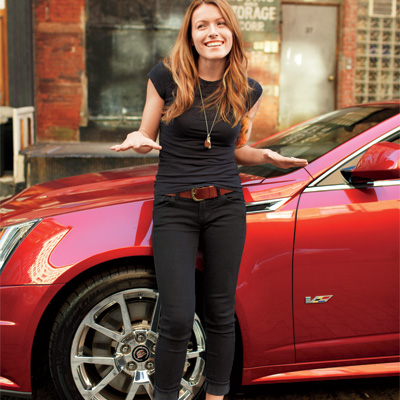 Veda Partalo and a Caddy. Together, they almost look like an advertisement. | Photo by Michael Edward
 The woman in my passenger seat says to kill the engine and restart it. I do, igniting a deep humming gurgle that crescendos, enveloping us in the reverberating neigh of 556 supercharged horses. The dials go green. The needles flutter past the redline. My audio-somatosensory experience has been fine-tuned to elicit maximum dopamine release, to provide an experience so radically unique that I might see an ancient thing in a modern light--even something as fossilized as the 110-year-old "Standard of the World," that old floaty boat, the Cadillac.
"I wanted you to experience that," says my passenger, 28-year-old Veda Partalo, planning director at Minneapolis-based Fallon, the ad agency tasked with completing Cadillac's decade-long makeover. It was proof: The car whose blinker your grandfather left on for miles--the car overtaken by Mercedes-Benz in the '70s, by BMW in the '80s, and by Lexus in the '90s, when rising prosperity meant rising demand for foreign stuff--is gone.
The new line, evolving since the 1999 Escalade, is beautifully tricked out. But in the car-selling business, particularly the luxury market, mechanics are not enough. Everything is shiny and fast. So Caddy has a unique marketing challenge: How do you shed the old stuffy image that brought it down 40 years ago and yet retain the thing that once made it great?
Crowd Sourcing Like it Should Be
A creative and smart twist on crowd-sourcing by Butler, Stern, Shine & Partners for Mini-Cooper. Like an improv show, BSSP asked fans to describe in six words their best test drive experience and then crafted an ad using the contest winner's words.[youtube https://www.youtube.com/watch?v=Cm8C1TpPkUQ&w=560&h=315]