Stratifesto
Our passion are what drive our strengths. They are what makes us lose track of time. Gets us into a flow. It's what encourages us to keep going even when all we want to do is quit. It's that moment when our heart races and we're on a high, the thrill of discovery. The feeling of being blessed, knowing we are doing exactly what we want to do in life. And that grateful moment, like we are beating the system, knowing we are getting paid to pursue our passions.
Here are my passions. Maybe they're yours.
People
I strive to explore and understand human motivations. Why do we do what we do? Are we more similar than different? Is there any rationale to our decisions or is it all emotional? An excel chart full of useful data is like a light in the dark; qualitative, honest one-on-one interviews like water in the desert.
Culture
We are the product of a specific time and place - of our background, of our upbringing. Of "low-brow" cultural influences and "high brow." Of music, of film, of celebrity and of ethnicity and religion. Of politics, of climate change and the economy. What a beautiful, sometimes frightening, often hopeful world we live in that I have an insatiable appetite to explore.
Brand Building
An intangible set of values, of unquantifiable worth has the power to pique our desire. It's that allusive set of behaviors that makes us willing to pay more, a tone of voice, design and overall experience that tickles our senses. It's that element that introduces us to likeminded people, makes us feel like someone else gets us. A club we are proud to be a part of.
Transformation
The only thing constant is change. How thrilling to offer clients a new perspective that is a catalyst for change? A website design that turns a sales-led business to digital-first, consumer-first. A campaign strategy that inspires action through doing versus saying. A brand re-fresh that better reflects the cultural shifts while retaining the brand values. An innovation that is mutually beneficial to the customer as it is to the business.
Storytelling
Have you captured someone's attention? Made them actually feel something? Have you brought an idea to life through imagery or film? A compelling story has the power to convince people of your point of view. It can get clients on your side, consumers in the door. What a powerful tool strategists have at their disposal, one that I love having the opportunity to continually hone.
How Brands Are Built In The Digital Age
This winter, I applied to the Admap Prize 2014 through WARC on how brands are built in the digital age and was shortlisted. Here's my entry and thoughts on building brands in the digital age. Approximately two to three times a week, I purchase my morning coffee at a charming French café that’s slightly out of the way on my morning commute. I allow myself this small luxury, despite owning all the necessary requirements for home-brewing. The moment I step into this café, I am magically transported from the realities of fast-paced New York City to every American’s romantic notion of Paris. Furthering this illusion, I am surrounded by elegant French expats energetically catching up after dropping their children off at the Lycée Francais, ordering their cafés and croissants. As I approach the register, the refined Scottish barista, Andrew, greets me with a familiar hello and how are you, already knowing my usual order. I am not just a customer, but am the mayor (according to FourSquare). And this café is not just a caffeine and gluten–dispensing establishment, but a well-curated experience. Every employee, cake, cup and decoration has been specifically chosen to appeal to a particular customer. Impeccable service and friendly employees engage customers, while goodies like imported French treats delight them. It’s no surprise that I am not their only loyal customer.
Frank Rose points out in The Art of Immersion that “[The Internet] is the first medium that can act like all media—it can be text, or audio, or video, or all of the above. It is nonlinear … inherently participatory … constantly encouraging you to comment, to contribute, to join in. And it is immersive.” (1) The Internet is not just immersive, but mimics real life, in-person experiences. It can replace the music we hear as we walk into an establishment; the patterns, textures and colors specifically chosen to tell a story about that store; the stories and information the sales clerk tells us about their products. It can even substitute how employees interact with customers with a virtual “How can I help you?” through Twitter. As brands show up in our social network feeds, the line between “Would I like to buy this product?” and “Do I want to have a relationship with this brand?” has blurred.
As marketers, we are tasked with understanding how our brands should behave in the digital age—with wondering how to unlock the magic formula, the right amount of customer data with the appropriate social channels and mobile apps. But what if there is no magic formula? What if succeeding in the digital age, regardless of the customer or location requires a different attitude from brands, one that involves genuinely caring about their customers to create a unique, branded experience. Digital technology enables brands to infuse genuine human touch in all communication points - a two-way conversation and personalization that mirrors the types of in-person interactions that have dominated seller/customer relationships throughout history.
“May I help you” begins with actually being there. An establishment carefully picks their location to cater to a specific clientele—to fill an unmet need. Although businesses are developed with the intent of making a profit, successful brands are also closely tied with the intent of helping people – either through their location or actual products. For my favorite café, the owners may have been compelled by the intention of giving French expatsa place to connect. For Warby Parker, their purpose may have revolved around giving customers affordable glasses, shipped online. But most importantly, both establishments carefully picked their location based on their customer’s needs, whether it’s choosing a particular neighborhood to deciding on an online distribution platform. Brands who genuinely care about their customers’ needs and behaviors have an obligation to continually track where their customer may want to purchase products in the future and to serve those unmet needs.
 Tesco famously catered to the buying needs of their customers when they created a “virtual store” in a Korean subway, allowing busy customers to conveniently scan products using smartphone-enabled QR codes. Kate Spade did something similar, creating a 24-hour virtual store in front of a few New York City empty storefronts, allowing customers to purchase products via the window screen and have it delivered within an hour. While the focus of these examples are often on the technology used, at the heart of these executions was a recognition by brands that they could use technology to better serve their customers’ needs.
A brand that genuinely cares about their customer delivers what they say they will deliver, and understands exactly what their customer values and needs. At a basic level, a person entering a coffee shop might value impeccable customer service and delicious pastries, but nowadays, a caffeine junkie might also seek reliable Wi-Fi. My favorite coffee shop offers free Wi-Fi, a service that has delighted Starbucks’ customers for years. By anticipating and catering to customers’ needs, brands are building their reputation one customer at a time. In the digital age, reputation is critical –the shareable nature of social can cause one bad Yelp review to go viral. A quick Google search can make it easy to tell which companies genuinely care about their customers and which companies one suspects are only focused on short term gain. In fact, the only types of companies that have survived despite bad reputations are those that customers have had no choice in supporting—from cable to health insurance. But even those are seeing a decline in sales as alternatives become available. Even brands that compete on price, most famously Amazon, work to ensure quality customer service and products, showing they care about their customers’ needs.
At its core, what a customer seeks in a product is unlikely to change with the introduction of new technology. Even purely digital brands, built in the digital age, like Facebook have revolved first and foremost around needs of their users. Apple understood that buying expensive electronics requires extensive research and the assurance that the product will continue to work. Consequently they have built their brand on excellent customer service that they have extended to online tools. With banks, people value security and customer service. In person, that might mean money held in a secure vault and helpful, well-dressed clerks at bank locations. In the digital space, that could translate to 24-7 online chat access, a user-focused mobile app and online, informative content. Citi has a history of using technology to serve their customers’ needs—first with the introduction of ATMs, and most recently with a mobile app that allows customers to scan checks into their accounts. Nike sells the promise of fitness whether through their athletic gear, mobile apps, FuelBand or even in-person athletic events.
Millennials, as a consumer group, are particularly important for brands to understand in the digital age, since they are the demographic most likely to be heavy consumers of digital technology. In December 2013, The New York Times published an opinion piece called Millennial Searchers, noting the ways in which Millennials seek meaning and purpose in their lives. For them, it is no longer enough to purchase something that will give them a fleeting sense of happiness—they seek more meaning in their purchases. Across categories, we see older brands tying themselves to a bigger purpose –showing they care about bigger issues and using social to spread that purpose. From IBM’s Smarter Planet to Dove’s Real Beauty, each seeks to convey that their products help fulfill a bigger mission. On the flipside, brands built within the digital age started with a genuine purpose: TOMS’s Buy A Pair, Give A Pair campaign was based on the premise of philanthropy, allowing the average person to be a philanthropist. Warby Parker followed suit. For younger brands, especially those appealing to Millennials, what you do as a company is more important than what you say because it helps establish you as being genuinely focused on customers. Each brand helps customers fill an emotional need with their purchase.
It has never been more important to ensure that at the heart of your brand, you care about customers. Digital technology has pulled away the curtain that marketing previously created around brands. Each communication and customer touch point becomes an opportunity for everyone to see how a brand treats their customer. Brands like United (Breaks Guitars), JPMorgan (Ask JP Morgan) and have learned that infusing a customer-focused culture is critical in maintaining the reputation of the company. On the flip side, companies with excellent customer experiences, such as Apple, Virgin America or Zappos, have grown in the digital age. In fact, their success is often attributed to a strong company culture. Employee and in-person experiences have the potential to represent the brand, and interactions can easily go digital through an online review or public Tweet.
Finally, a brand that truly cares will add that little bit of delight, fulfilling a human desire and want. It’s asking how your day is in a way that makes you feel special. Carefully wrapping your purchase. It’s the décor that provides a mini escape to Paris. Or the music that puts you in a better mood. It’s an employee that goes above and beyond for their customer—remembers their order, ensures a particular product is in stock. Or the particularly knowledgeable store clerk, who, like a good friend, gives you an honest opinion as to why you shouldn’t buy something in their store.
 For the online experience, decor can be translated into a well designed website that takes you to another place as you browse during your lunch break. A busy shelf of curated objects can be turned into a Pinterest board meant as visual eye candy, as in Anthroplogie’s merchandising. It could be having a well-designed e-commerce site that allows customers to browse thoroughly and uninterrupted before purchasing. It’s the technology a company can harness to predict what a customer wants based on their interactions. Or six-second how-to Vine videos bringing out fantasies of DYI home improvement. Brands can even create physical spaces to cater to customers’ desires.
 In December 2013, Samsung created a pop-up experience store in New York’s Soho. Customers were treated to free coffee, and the ultimate indulgence- cupcakes while enjoying a space to relax during the busy shopping season. In the digital age, what may once have been a local stunt can now be shared instantly and globally through people’ssocial feeds, allowing everyone to see how a brand caters to the hidden desires of their customers.
Two-way interactions can be built with a brand over time through social media—an exchange never achieved through traditional advertising. A barista can facilitate conversations between like-minded customers, playing host or even matchmaker. Social media communities can be built and nurtured by community managers with no direct intention to sell products, only a direct intent to care about their customers’ wants.
Traditional advertising plays a critical role in adding to people’s desires and wants. Now that a Google search (ZMOT) has taken over the role of conveying detailed product benefits and reviews, traditional advertising, more than ever, is a place to tell a compelling story. Budweiser’s “Puppy Love”—a heartwarming story of love between a dog and a horse—was voted one of the most popular ads of the Supe r Bowl in 2014. As viewers, we may not exactly understand how the commercial fit into the heart of the brand, but our hearts were filled with warmth as we viewed the commercial. Popular viral ads of 2013 were likely to illuminate bigger issues that we are often too afraid to discuss on our own but want to (Dove’s Real Beauty Sketches), act as a purely distracting entertainment (Evian’s Baby & Me), make us laugh (Kmart’s “Ship My Pants) or make us cry out of joy (GoPro’s Fireman Saves Kitten). Ads that “go viral” are emotive, story-driven, funny and genuinely entertaining—all qualities that compel us to share so that we can fulfill our desire to connect with others, using them as conversational fodder.
While print ads are still a place to inform people about product benefits, they’ve also always been a place to inspire. Just as people have always cut out print ads and posted them in their spaces to inspire and aspire to, we can now “pin” and share visuals created by brands. A traditional print ad might be more product-focused, whereas brands can now create inspirational, shareable online images with quotes or content that touches on that hidden desire of constant self-improvement.
Regardless of the medium or execution, every point of communication for a brand is connected and conveys whether or not a brand genuinely cares about their customers. For brands with exciting products and strong, customer-focused values, there is a world of opportunity in the digital age. But for brands with a weak product that is not customer-focused, succeeding in the digital age will be an uphill battle.
To the naked eye, it appears that digital technology has revolutionized our universe. It has changed how we communicate and how we interact with each other, with ourselves and even with brands. But ultimately it has brought humanity and a new sense of intimacy back into our lives that brands can now tap into. It’s that human touch, that feeling that a brand genuinely cares, brought to us through a personalized Facebook exchange, a convenient mobile purchase or inspiring branded content. After decades of impersonal, mass marketing, digital technology finally enables brands to reach across the counter—warmly shaking their customers’ hands.
Getting out of the Red - Red Lobster's Turn Around?
 Ever since the NY Times wrote an article back in February on the eroding middle class effecting major restaurant chains, I've been interested in this phenomenon. How do companies survive and even shift their business towards the growing upper class without neglecting and even disappointing their base? Interestingly enough, many companies catering to the middle class were founded on the very principal of bringing that product to the masses - whether it was coffee (Folgers) or seafood (Red Lobster). What was once a luxury is now attainable. But over the last few decades, it wouldn't be a stretch to say many businesses have taken advantage of their middle class customer, sacrificing quality for cost, focusing heavily on promotions and hoping a gimmick would get people through the door. So beloved brands have become just another cheap deal - quantity over quality. With the conversation shifting from "I got this at X" to "I got this at X% off." Brands have fallen into a price war arms race, lowering the value of their products and brand. What once was a semi-annual special trip to a restaurant may now be a regular, monthly routine. Or once cherished clothing is now discarded with the seasons.Where has this gotten us? Americans are now more in debt, overweight, and it's safe to assume based on the rise of the self-storage industry, have more stuff than ever. Companies are struggling to keep up with customer quantity demands, hurting the environment and navigating murky labor practices as they continue to cut costs.
While they're struggling, a counter-trend is rising. Fast food is being out run by fast casual with sustainability-focused companies like Chipotle leading the charge. Even McDonald's has decided to rebrand. Online retailers focused on sustainability or ethically sourced materials like Zady, Accompany, Everlane and Warby Parker are popping up every day. And trendsetters like Millennials are shifting their spending - focusing on pure utility rather than the emotional benefits that come from owning a brand. For instance, car sharing companies have been proven to displace car sales. On a smaller scale, the growing number of subscription coffee services and even ingredient delivery services like Blue Apron show that people are choosing to forgo the prestige of eating and drinking out in order to save money - but they still want a high quality experience.
What do I predict will happen when brands like Red Lobster go back to their roots and offer the high quality experience they once did? First, they'll attract a whole new customer - the upper middle to upper class who may have even had positive associations with the brand from their childhood. Red Lobster may lose customers who were driven by discounts and deals but most importantly, their core customer - a true advocate of the brand - may learn to shift their budgets. What was once a cherished, special meal will become a special, occasional meal once again. Bringing Red Lobster out of the red.
Ethics and Brand Building In the Digital Age

Recently, I went after a job on a client that made a huge environmental blunder decades ago which has tarnished their reputation ever since. At first, I was hesitant, but then I did more research and learned the client had donated an incredibly large sum of money to charity and is working to improve their sustainability practices. During the interview, the strategy director mentioned the client knows they need to improve their sustainability practices - not just talk about it for PR's sake, but actually do good things.
As marketers, we're faced with this dilemma on a regular basis. We can feel good about working on clients like Nike, Google and Starbucks - knowing we're pushing not only a superior product but supporting sustainability or even an innovative employer. But the real opportunity is in getting those clients who once put profit first and foremost, to put customers first. It's getting those organizations who didn't care about sustainability to become more sustainable. Or those who weren't innovative to change their organizational structure to support innovation. It's getting the person who was a total jerk - the guy who said "my way or the highway" to realize that kind of behavior doesn't get him friends in this day and age. Is it black and white? Are certain organizations not worth helping? Is a culture of greed or lack of values so engrained that as marketers, we're better off letting them die as brands or can they be saved?
Or in the words of Olivia Pope's father on Scandal, are we, as cultural strategists, here to bring clients into the light?
Asking the Wrong Questions, Why Sustainability Is the Answer

Publishing my essay for ADMAP's 2013 Prize that answers the question:
"Can brands maximize profits and be a force for social good?"
Before the invention of traditional advertising, companies lived and died by their reputation. A good reputation depended on having both quality products and customer service. There was an emotional connection between ones neighbor, the shopkeeper, the products and even the manufacturing process itself. But with Henry Ford’s invention of the assembly line, we have lost that connection with the manufacturing process, the earth and even each other. Fortunately technology has brought that connection back. Companies have discovered that considering the environment and labor force in the supply chain has delivered measurable cost savings. Research has shown that consumers seek brands that give back to society. And business case studies have been made that show how businesses can enter new markets from sustainability efforts. The question we should be asking brands as marketing and business professionals is not, can brands maximize profits and be a force for social good, but why are they ignoring this proven path towards sustainability and continued profitability.
The foundation for life, water has also been recognized as a critical component to manufacturing and the supply chain. A recent report by The Carbon Disclosure Project, a group that monitors corporations’ greenhouse gas emissions, stated that “analysis indicates that current “business as usual” water management practices and levels of water productivity will put at risk approximately US$63 trillion, or 45 percent of the projected 2050 global GDP (at 2000 prices), equivalent to 1.5 times the size of today’s entire global economy.” The effects of climate change are clearly evident in challenges companies have had to face from water risk. More than half of Global 500 respondents, from a 2012 CDP study, experienced detrimental water-related business impacts from flood and associated financial costs as high as US$200 million, up 38% from last year. While the science around climate change is still being debated, the predicted effects of frequent extreme weather such as floods and droughts can affect many aspects of the manufacturing process from cotton crops to equipment damage from flooding. It is not a huge leap to assume that this number may increase after the final costs of Hurricane Sandy are all accounted for.
Fortunately, for every alarming statistic, there are companies that are leading the practice in water conservation. Both General Motors and H&M have significantly reduced the amount of water used in their manufacturing process. Companies are even reporting that water-based initiatives have offered new opportunities from increased brand value (40%) to entirely new business opportunities. Levi Strauss has been a pioneer in water reduction during their manufacturing process, introducing Water<Less jeans in 2011. While sales figures on the jeans have not been released, they have increased their manufacturing of the product from 1.5 million in 2011 to 29 million in 2012. Levi’s has recognized that the initiative is in line with both their business goals and consumer values. They continue to evolve their sustainable product offerings. Like Levi’s, Unilever has pioneered water-related sustainability efforts to appeal to their current consumers and enter entirely new markets. A few years ago, they developed a fabric conditioner that only requires one bucket of water for rinsing instead of three, gaining a 60% increase in usage from 2010.
Half the cost of business is in the supply chain. The supply chain is also responsible for 70 percent of greenhouse-gas emissions from manufacturing companies. While most members of the United Nations Global Compact of Sustainability surveyed by Accenture agreed that sustainability should be integrated into all aspects of operations, just over half, actually achieved sustainability. The path to reducing emissions has already been paved; 40 percent of CDP members have reported financial savings from their emissions reduction activities. Companies have even benefited from developing smarter transportation routes or partnering with other companies to reduce fuel costs from deliveries.
No sellable good can be harvested, created or transported without the touch of a human hand or at least one to guide the machinery. And yet, many companies treat their workers like machines, with no feelings, human needs or compassion. But for a moment, let us put our humanity aside and pretend that labor is just a line item in the manufacturing process. Most machines would have a short lifespan if they were kept running without proper maintenance. The cost of replacing them would far out weigh the cost of fixing them. But workers are not machines. While they require more “maintenance” and time off than the average machine, they also have the capacity to do so much more. BSR, a corporate responsibilities consultancy, published the results of several case studies where they helped improve the working conditions in factory and agricultural settings in Central American and the Dominican Republic. By helping to improve the lives of the workers, they also helped improve the business. Productivity increased while operating costs and turnover decreased.
Look no further than your local Whole Foods, Starbucks or trendy café to understand how consumers feel about fair labor practices. The sale of Fair Trade products has grown globally about 30% every year, even during a recession. Apple came famously under fire after The New York Times created a shocking expose of Foxconn’s working conditions. Faced with consumer pressure, investigations by NGOs and continued NYT articles about the factory, Apple eventually worked with Foxconn to improve labor conditions. If Foxconn does not serve as enough of a lesson, economics will. Over the next decade, it will be absolutely imperative for companies to learn how to develop more sustainable labor practices, especially in the China. The IMF predicts in a 2013 paper that between 2020 and 2025, China will experience a labor shortage economy. This shift could even signal the end of cheap goods.
What is supply without demand? A critical component to profitability is revenue. The Guardian conducted a study in 2010 on consumer attitudes and perceptions on sustainability. “…79% indicated that a company offering products and services with low environmental impacts would be more likely to win their loyalty” and felt the same factors would help them develop loyalty. Over 70% thought that energy, manufacturing and transport companies are not environmentally friendly or have little concern for the environment. No follow up papers have been published but one can guess that sentiments would be similar given the man-made and climate change-related disasters that have occurred since it was published in June 2010.
“People’s willingness to buy, recommend, work for and invest in a company is driven 60% by their perceptions of the company, and only 40% by their perceptions of their products.” Kasper Ulf Nielsen, an executive partner at the Reputation Institute
Businesses have lost valuable consumer trust over the last decade. Trust in business fell from 53% in 2011 to 47% in 2012 and customers cited that businesses did not meet their expectations due to their practices. Trust for business is slowly rising to 58% according to the 2013 Edelman Trust Barometer. In fact, business is trusted more than government in more than half the 26 markets surveyed. The Edelman Trust Barometer also found that societal factors like treating employees well, has “ethical business practices” and “addresses society’s needs” are attributes associated with future trust. The most telling finding as it relates to the general public’s interest in social good is that Non-Governmental Organizations (NGOs) remain the most trusted institution.
The increase of concern for the environment and societal ills is due to the historically high levels of information that the average person has access to. In 2011, Google published a pivotal free eBook called ZMOT, Winning the Zero Moment of Truth. The book describes a shift in how consumers make purchasing decisions. Once influenced by branding, advertising and public relations, consumers can now have access to detailed product information, company policies and even customer reviews before purchasing an item. While the book is mainly focused on a behavioral shift in purchasing, it also signals a cultural shift. We can no longer cite ignorance as an excuse for our behavior. We have an increasing proliferation of tools like the GoodGuide to tell us at the point of purchase how sustainable a company’s policies are. If we cannot find it on Google, our social network can act as a resource for influencing our purchasing decisions.
Consumers have a growing appetite for finding more meaning in their purchases. Inn the United States, we find a growing interest in hand crafted goods, fueled by Etsy, eBay and other peer to peer ecommerce sites. Customers are also experiencing a greater connection to their farmer with the proliferation of local farmer’s markets across the country.
Global viral campaigns like KONY reveal that there is a cultural pressure to align oneself with social initiatives. Non-profits like Charity Water allows us to see the benefits of our philanthropy, showing us that we do not have to be wealthy to make a positive societal impact. The one-to-one model of Tom’s and Warby Parker has made it cool to identify with a label, as long as that label gives back to society. And indulging in Ben & Jerry’s makes eating ice cream a little less gluttonous when one considers all their CSR initiatives. Finally, countless personal care brands have worked to match their manufacturing process to their newly created “natural” image.
While the debate over being a force for good and making a profit is still being debated, a few companies have taken off in developing their sustainability practices, paving the way for others. Patagonia has become a thought leader in creating sustainability practices, especially for clothing brands, publishing The Responsible Company in 2012 as a guide for businesses. They have strived to greatly increase the quality of their products and promote thoughtful consumption over disposable goods. In 2011, on the most famous American shopping day of the year, Patagonia urged their customers not to buy their products. Their program, Common Threads, urges consumers to reduce, repair, reuse and recycle their clothing. Their initiatives are working, both for creating sustainability and a profitable business model. Despite the extreme economic woes over the last five years, their revenue is set to nearly double.
Another pioneer of sustainability is Unilever. During the keynote speech given at The Marketing Society Conference in November 2011, CMO Keith Weed cites population growth as a strong driver for Unilever’s sustainability efforts. In addition to their commitment to reduce their carbon footprint by modifying their supply process, they have also spearheaded non-profit initiatives. For example, their disinfectant soap, Lifebuoy founded the first ever Global Handwashing Day in 2008 with the United Nations and other partners. In addition to improving hygiene and preventing disease, the initiative promoted usage of the product, gaining sales and growing market share.
Starbucks is another global example of companies promoting sustainability. While their impact on the environment is debatable given the proliferation of used Starbucks coffee cups, their commitment to labor is not. They have worked to make their supply chain sustainable, including a commitment to farmer labor practices. Starbucks rallied their customers through Create Jobs for U.S.A., offering customers a braided wristband in exchange for their $5 donation towards the Community Development Financial Institutions. Howard Schultz is a businessman and while it is clear that he may care more about sustainability than other CEOs, he is still interested in long-term profitability. A study done by UCLA in 2012 found that "adopting green practices isn't just good for the environment, it's good for your employees and it's good for your bottom line. Employees in such green firms are more motivated, receive more training, and benefit from better interpersonal relationships. The employees at green companies are therefore more productive than employees in more conventional firms."
When one looks at the overwhelming evidence, it is clear that maximizing profits and being a source for social good are synergistic goals for companies. Creating a more sustainable supply chain reduces costs. The knowledge that the company is being a source for good both motivates employees and consumers, increasing productivity and revenue. Companies have adjusted their business models to succeed in dramatic market shifts from introducing ecommerce to developing a social media presence and offering their customers utilities through mobile. Why should adjusting to sustainable business practices be any different? The health of society and business depend on it.
How Childhood Play Leads To Creativity
Just read this article, Give childhood back to children: if we want our offspring to have happy, productive and moral lives, we must allow more time for play, not less - written by Dr. Peter Gray, research professor of psychology at Boston College. His thesis is that it's human, even animal nature for children to play - an act that helps them develop a myriad of skills from conflict resolution to creativity. But this ability to play is being threatened by education systems around the world, replacing free times with schooling or unorganized play with formalized athletics. Anyone who's watched a cat video featuring more than one kitten knows that constant play is critical to understanding a person's physical and emotional boundaries, among other skills learned.[youtube https://www.youtube.com/watch?v=YLDbGqJ2KYk]
Gray makes the point that
"... Even more than in the past, creativity is a key to economic success. We no longer need people to follow directions in robot-like ways (we have robots for that), or to perform routine calculations (we have computers for that), or to answer already-answered questions (we have search engines for that). But we do need people who can ask and seek answers to new questions, solve new problems and anticipate obstacles before they arise. These all require the ability to think creatively. The creative mind is a playful mind."
As I came out of working on a Saturday yesterday, an act that is by no means rare in the working world, especially the fast-paced world of advertising, I found myself craving a bit of play, of creative inspiration. Just as children's playtime is being threatened, adults find themselves increasingly working all hours. In New York, it's not uncommon for the phrase "I had to work over the weekend" to be some form of bragging, or even considered a right of passage to success. But how does this effect our ability to be creative or make original connections? At Miami Ad School's Planning Boot Camp, I remember our first Weekend Workshop teacher taught a class on the overall strategic process - informing us that the trick to coming to an insight is to walk away from the work at hand after absorbing every bit of information you could. Take a walk. Go for a run. Go to a museum and as your focusing on something else, connections will be made in your brain.
So if you find yourself actually having a few minutes to yourself during the workweek, go outside. Take a walk. Actually make use of that game room your company installed years ago. Flip through the magazines at your local magazine stand. Go to a museum. Or dip onto a store-filled street. Because in the world of creativity, success doesn't just come with sheer willpower and hard work but rather, freeing up your mind to play.
Faith In Humanity Restored: Cheerios
[youtube https://www.youtube.com/watch?v=VifdBFp5pnw]As a stark contrast to my last post, I thought I'd end the week with something a bit more positive. I'm sure you've all seen this by now. It's an interview with kids - about 6 to 13 years old, regarding their thoughts on the controversial Cheerios commercial that was aired with a mixed race couple. Spoiler: the kids had absolutely no idea that people could be against mixed race couples. Once they were made aware of the negative comments via the YouTube video, they were completely outraged and thought anyone who would spend their time spewing racial hate, was a loser and should be banned from YouTube.
I love when interviews of a random sampling brings more color to a quantitative study that's already been done. Back in April 2012, JWT published a report, Gen Z: Digital In Their DNA. While the report focused on the digital habits of Gen Z, it's findings show that their digital habits might explain their worldview. I've always found fault with separating digital strategy with account planning. As planners, we have an obligation to understand how digital technology effects our very being and we should use digital tools to gain these insights. Thanks to the ubiquity of experiencing life through Instagram, we now all have constant FOMO - a term coined in the mid-80's but only now coming into common use. Parents are cautioned against giving their children too much iPad screen time for fear it will effect their cognitive abilities and make them more prone to ADD. And on the more positive side, children can now use digital to gain a more personal view of their counterparts from around the world through social media - way more revealing than the hand written pen-pal letters of the past. Without barriers such as geography or even social exclusion, children have learned that the kid on the other side of the world might have a different reality, but at their core, they are dealing with some of the same set of problems. They can no longer be taught to fear "the other." In fact, JWT found that:
"One consequence of this hyper-connectedness will be Gen Z’s multicultural and globally oriented mindset—much like Millennials but further amplified. Kids are Skyping with peers on the other side of the globe, and they’re taking part in initiatives like the Face to Faith program (part of the Tony Blair Faith Foundation), which uses technology to connect students of different religions and cultures. Expect even more linguistic and cultural borrowings and consistencies across distant nations and regions."
So as us New Yorkers deal with the extreme heat, still reeling from some of the sadder and maddening news that started off the week, we can find comfort in the knowledge that there's reason to be optimistic about our global future.
Staying In The Black: Budgeting Tips For Freelancers

One of the benefits of having worked for a media agency is that the concept of measurable ROI has now become engrained into my thinking. In fact, we can potentially apply this to all areas of our life - from what we eat and how we exercise to the types of relationships we build and keep. But a more obvious application would be how we apply this concept to our personal finances.
A few weeks ago, I decided it was time to take control of my finances and recognize that the only thing I could change in the immediate future were my spending habits. Like any strategist, I delved into research, conducting my own personal behavioral study. The internet told me that Toshl Finance was the best spending tracker and budgeting app.

So I downloaded the app and inputted a weekly, optimistic budget of $150. Despite having Mint for the last few years, I found the act of inputting my expenditures curbed my spending habits immensely. Instead of having black holes of "cash & ATM" littering my Mint account, I had a detailed history of where my money went. I initially decided to leave off the one off's - a prescription, new frames, etc. because I couldn't handle the truth. Finally, I took the plunge and upped my budget to $200 a week, vowing to input every last penny. In the process of discovering my spending habits, I changed my behavior. Suddenly, one drink I didn't need in the first place didn't seem as appealing if it threatened to tip my weekly budget into the red. I even bought an espresso maker with my credit card points. I finally convinced myself that the experience of standing in line at the cutest café, surrounded by French people, was not worth a potential $20 a week, $80 a month or if I really wanted to make a point - $800 a year. And not contributing to a landfill with my cup usage was an added motivator.
But more importantly, now that I'm freelancing, I can develop a road map for what I need to achieve to stay in the black instead of the less organized approach of living job to job. Plus, this time around, I can be realistic and base my budget on my actual spending habits instead of making up an imaginary number as to what I hope to spend per month. By adding up my fixed costs; rent, health insurance, gym, mobile phone, etc. with my newly discovered monthly spending number, I can get a very solid idea of what I need to stay in the black. I took that number and divided it by my hourly rate and day rate. I now know that I need to work 100 hours a month or 22 hours a week, or 10 days at my day rate in order to achieve my desired income. And obviously this is a best case scenario but it still gives me a good idea as to how I'm doing with gaining clients. As a freelancer, you are your own biz dev, which means I'll need to spend at least 40% of my time developing my own business to attract clients, and the other 60% working on actual client work. I'm looking forward to the challenge!
How to Make It In New York City

Last week, I reentered the unpredictable world of strategic consulting. I'm excited to work with clients across various verticals and disciplines, conducting research and providing both insights and strategic direction to impact their business and help them better engage with their consumers. It's increasingly apparent that a full time position only offers the illusion of stability in today's economic climate. In fact, every time I get LinkedIn updates from my network, half the updates show that someone has gone freelance; whether by choice or layoff, I cannot say. I'm sure universal health coverage will accelerate this trend. A recent New York Times article pointed to a Gallup study that found
"Among the 100 million people in this country who hold full-time jobs, about 70 percent of them either hate going to work or have mentally checked out to the point of costing their companies money — “roaming the halls spreading discontent,” as Gallup reported. Only 30 percent of workers are “engaged and inspired” at work."
While a full time position can offer (often) measly health benefits and the continuity of working with the same colleagues and clients, employees start to get too complacent, failing to maintain their network and nurture their reputation outside the company. And then they find themselves on the chopping block, without an updated resume or wealth of contacts to help them land their next gig.
So after surrounding myself with successful people, absorbing any hearty advice I come across and attending as many educational events I can fit in, I've narrowed down a few rules for becoming a successful consultant or protect ourselves from a lengthy unemployment. Through social media especially, we have the power to shape our own brand, so that if we do end up on the chopping block, we have enough contacts, credibility and experience to turn that snafu into an opportunity.
1. Solidify and properly convey your story. Everyone you come across wants to understand where you came from in order to better connect. Figure out what makes you tick - and how those insights led to where you are now. My story is that I've always had a deep fascination with people from the time I was in high school, taking advanced life-drawing classes, to a long history of street and portrait photography. I translated this passion into consumer insight-driven strategy, working with brands to better understand their consumer's motivations and habits to grow their business. Michael Margolis from Get Storied, believes that often something that happened when we were between 8-10 years old shaped who we are today. Growing up in a bi-religious household, in an ethnically diverse town shaped my fascination with people and their cultural influences. Yearly trips to an American enclave in the middle of Mexico solidified this interest.
2. Establish your credibility. As the return of investment of MBAs increasingly come into question, entrepreneurs have sought new forms of establishing credibility among their clients. First and foremost, be authentic and honest in your business dealings. Put 200% into every client you work for and only do your best work. Extend the brand of you through speaking engagements, teaching (Skillshare), public presentations (Slideshare), writing articles and working with respected clients. Document your achievements and get permission to publish any positive client feedback.
3. Grow your network. Relationships are the glue that hold a successful career together. A strong network can offer mentorship, job opportunities and emotional support to navigate ones career. When we are passionate about our career, we find genuine connections with people in our industry. Maintain these connections regardless of your current employment status and make sure to give back or pay it forward. I have had the good fortune to have numerous people help me along the way. The best way to reward a mentor is to immediately incorporate their advice and achieve success doing so. The knowledge that they made a positive difference in someone's life and will pay it forward, is reward enough.
What advice have you been given that's been critical to your success?
Molly Aaker's Guide to Life: Job Stuff
Hey there! You may remember me as that lady who used to post more than once every few weeks. Well.. things have been a bit crazy. For a brief while I was actually freelancing at two places at once. I supposed when it rains, it pours. Seriously. It was pouring. On top of that, I was looking for a new apartment, finally ready to settle after two years of subletting and moving around. I had to make so many decisions over the last few weeks that at some point I probably just mentally shut down - gave in and just watched funny cat videos - or something like that. It seemed like every decision I've had to make from where to live to what kind of bedding to buy took f%*king work. I mean seriously, isn't the internet supposed to just magically give us the information we need, when we need it?! Well. I've got news for you. It doesn't.
So over the next few days / weeks / months, I'd like to share what I've learned. Hopefully so ya'll won't have to go through the same thing. Although even if you do, there's no doubt you'll learn something.
Lesson 1: I started a new job. This is beyond exciting. Not only am I working with cool/smart people, finally have a steady paycheck and eventually health insurance, but I'm in a growing field. I'm a strategist at a mobile media agency. Don't ask me to explain this because honestly, the possibilities are endless. So what have I learned? Well... coming from the advertising side, I'd say we can be pretty judgmental about various aspects of the advertising process. Creatives might roll their eyes at account people whereas account planners may scoff at the idea of working for a media agency. But guess what, we're all just cogs in the wheel (just kidding). What I meant to say was - the more we know about each others' roles, the better we'll be. Especially in an area that's still being defined. While I'm still learning the ropes, the experience so far has been invaluable. I work with results oriented, left-brained Excel wizards who get excited about "branding" whereas I'm finally learning the true meaning of ROI.
SO the lesson learned is; be conscious of where your next job can take your career but also don't be afraid to try the off beaten path. So many recruiters want candidates that are wrapped up in a neat little bow with a few years of big agency experience, etc. but there is an undefined world out there to explore. This world straddles technology and startups. It embraces both cultural diversity and those coming from different careers. And recognizes that a person doesn't need to have performed the exact job to excel. Find these companies. Find the hiring managers who will recognize and appreciate your intelligence and then go for it. Dive in. Help to define the process, to grow the company and to incorporate a different perspective into their business. You'll both be the stronger for it.

Digital Strategy vs. Brand Planning
During my internet research, I stumbled upon this thorough explanation of how digital strategy and brand planning are different. I've always been interested in both and hate that the industry makes us choose. In fact, I think choosing to work in both areas has hurt me in landing a full time job because employers want to pin you as one thing, not a generalist. People, this ain't politics and I shouldn't have to pick sides! I'm a strong believer, like Jinal Shah, that the two disciplines will eventually merge. But as Jinal points out, right now there aren't enough planners who are interested in digital for that to happen. And as someone who regularly attends tech meetups, just volunteered at a hackathon and is considered an early adopter, I can tell you that one needs to be excited about digital to delve into digital strategy. See Jinal's post below.
Let’s fuckin’ set the record straight: Account planners and digital strategists are NOT the same
May 29th, 2012 •
I vehemently disagree with the tendency most planners have in assuming that a planner and a strategist is one and the same. The argument is not about the title – which could be merely semantics but it is about the work process and the skill-set. It is especially easy to mistake and get confused about this in the type of environment we work in (i.e advertising agency) Step outside this bubble, and you’ll see that there are many flavors to a digital strategist and there are several deep skill-sets they have honed and developed over time to be simply merged with planning.

Just as there are several layers to brand planning, there are several layers (maybe more) to digital planning. If you ask me, digital planning sits under brand planning and not next to it because it needs to ladder up to the brand attributes/ values etc.
My biggest criticism of traditional account planning is that the planners don’t get very involved in the actual “making” of the idea. It’s called production in planner speak and the word is boring and uninspiring but in digital – that’s really where the idea gets made. And the idea continues to morph until it is beta tested. It continues to morph even as it is launched and the results come in and we tweak and make the idea better in real-time. Digital strategy is the true marriage of account planning, creative and production.
A (good) digital strategist works for the idea. With digital, you have to launch an idea that is in perfect harmony with innovation and current consumer habits/behaviors. You have to launch an idea that is technologically not too advanced and not too behind – Goldilocks! And that is not production or creative’s job alone – that is as much strategic thinking and application of tactical insights.
Also, the insights a planner brings to the table often only inform the birth of the idea or a creative direction. The insights that a digital strategist brings to the table informs the success of the idea and the actual meat and flesh of it. Sometimes the insight or “strategy” maybe tactical (will this particular user experience really invite participation and sharing?) and sometimes it is blue-sky. Point is – these insights underwrite the making of the idea and its success across the phases.
Our role will eventually become obsolete – it will mostly be absorbed by creative and a very small part of it will be absorbed by planning. But not yet. And not for the next few years. We have far too many traditional planners that simply aren’t interested in digital to wear this hat. You can’t teach someone to be an early adopter or experiment with technology or play around and deeply immerse/ engage in every new social platform or make games. Advertising needs us right now so if you still don’t get it – please STFU and let us do our jobs.
Call us whatever the fuck you want – as long as you let us work for the idea. I’ve even swept floors and washed dishes in name of creative. So there.
If you have more questions or want to hear more thoughts – please see the most popular posts (to your right). Feel free to leave a comment, unless you are going to serve up the same drivel I’ve been reading.
Miami Ad School Account Planning Tips: Part Two
Since graduating Miami Ad School's Account Planning Boot Camp back in December 2010, I've gotten a considerable number of emails from people about to attend the program, asking for advice. So, I thought I'd create a Part Two to answer their questions.Check out my original post from February 2011 that outlines some basic advice on what to do before and during the program. Then peruse some of my posts under Advice. Apologies for the missing pictures but they got lost when I switched blog names. I give advice for doing job searches and general networking, but I encourage you to read [amazon_link id="0385512058" target="_blank" container="" container_class="" ]Never Eat Alone[/amazon_link] by Keith Ferrazzi. You should also check out the videos under the same category done by PSFK and RedScout.
If you don't come from an advertising background, immerse yourself in all things advertising. Sign up for newsletters from Ad Age, Ad Week, Creativity and even PSFK. I find the free information particularly helpful and anything else - I usually don't have time to read. You can also check out Junior Strategy for more information specifically about planning.
Clean up your online presence and make sure it's professional. How would you brand yourself? You had to brand yourself for the application and now think about your Twitter, LinkedIn and Instagram profiles. I found these social networking tools were a great way to meet future employers. Figure out what your "secret sauce" is. Are you a fantastic writer? Do you come from a film background and can emphasize your storytelling abilities? Are you a digital and social media wiz? Employers are looking to easily say, "oh, so and so is great with quant" rather than finding the jack of all trades.
It's been two years since I attended the course and I can't be sure what the current curriculum is, but be sure to remember that the world of strategy extends beyond being an account planner who briefs creatives to make print, web and television commercials. You could be a brand strategist, a social media strategist, content strategist, community manager, innovation strategist.. the list goes on. Make sure these possibilities are addressed in your program.
While the Boot Camp gives you an extra edge, it's no guarantee to getting a job right away. Generally you're surrounded by teachers from top agencies and taught the idealized version of planning where difficult clients, budgets and regulations don't apply. But when you graduate, you have to start somewhere and you're better off taking an internship, junior planning position, or planning position at a less desirable agency than waiting for the perfect job to open up. International students will have a harder time finding a job in the U.S. because they'll have to convince employers to sponsor them, but I suspect employers like having an international perspective from their planners so at least that works in their favor. Employers seem to want people who are young, fresh out of school and willing to intern or work for less money especially if it's a big or hot agency. Those who've switched careers and are in their late 20s/early 30s have to carve a more unique path to finding a full time job; one that might involve more contract work or taking a decent salary cut.
Finally, be incredibly proactive in your job search. Have an idea of what agencies you want to work for beforehand. Start going on informational interviews with recruiters and agencies. Keep them posted on your graduation date and make sure to follow up. The advertising world is rapidly changing as budgets move more towards digital and clients expect measurable results. Consider working on the client side, working for a startup, or in other strategic capacities that utilize skills learned at ad school. You're about to pursue a coveted job in a very competitive industry but the possibilities are endless so get cracking.
Finding ROI in Digital
 As anyone who works in advertising right now knows, the traditional agency model is going through a huge shift. Where clients once looked towards digital agencies for their specific expertise, we now realizing the importance of having strong integrated agencies; able to navigate everything from TV to a brand's social media presence. Agencies are looking at how they can incorporate these channels in the initial conversation with an overarching idea being at the centerpiece. Ironically, we are likely to go back to the model of the past where one agency handles most of the client's business. But for now, we are contending with more traditional agencies laying people off, social media agencies growing and digital agencies becoming more like large traditional agencies in their hay day, minus the huge production budgets.Recently, there has been a huge debate as to how engaged Facebook users are with brands. Social media agencies, who can thank Facebook for their very existence, are now asking, "how can we get clients to think about social media beyond Facebook?" Many of these social media agencies are hiring more digital strategists and people from traditional backgrounds, realizing they need to diversify their offerings. Everyone is trying to figure out how to navigate the day to day implementation of social media. Do agencies completely cut down long standing barriers and work hand in hand with clients' PR agencies? Do they guide brands initially and then recommend hiring an house community manager? And where does mobile fit into all of this? Do mobile app developers drive the strategy or are they just digital production houses?
And more importantly, agencies are increasingly being asked to prove their ROI on digital. Today, I saw an interesting online campaign done by Wranger Europe. The video featured an Instagram-like film of a couple in a romantic setting. I didn't even quite understand what the website was asking me to do - click an arrow to continue the film? There was a drag feature that froze the film and as far as I'm concerned, its only purpose was to look really cool. And you know what, it did. At that moment while playing on the site, I thought to myself, "Hmmm, Wrangler jeans." In fact, I don't know if I've ever thought about Wrangler jeans. But because Wrangler used digital in an innovative, pioneering way and referenced Instagram, I thought Wrangler was cool and will look for them the next time I go shopping.
So I ask - when was the last time a client measured the efficacy of a television campaign beyond eye balls and brand sentiment? When was the last time an agency measured a radio campaign beyond listeners? So as we increasingly expect digital to create a stronger connection with consumers, and have even higher expectations for measurability and ROI, I ask, why should digital be any different? By developing innovative, digital campaigns, clients are relaying to consumers that they are innovative and forward thinking, thus becoming more appealing in a consumer's eye. In fact, it's no coincidence that leaders in their category including Nike, American Express, Coca-Cola and even Virgin America are all known digital innovators. Sounds like some pretty strong ROI to me.
Planning: We Bring The Divergent Thinking In From The Outside by Heidi Hackemer
Just stumbled upon this presentation given by former BBH Strategy Director, now freelancer and dare I say, life-liver, Heidi Hackemer. Like many planners who've reached a senior level, she had a crisis of faith in the traditional planning model realizing that the linear career path, reliance on focus groups and online reports and value placed on "busyness" were not conducive to inspiring the best work. The presentation offers invaluable advice for planners.
planning, creativity & planning for creative campaigns [slideshare id=12558713?rel=0&w=425&h=355&fb=0&mw=0&mh=0&sc=no]
Beyond Interactive: Interview With Benjamin Falvo from Clark + Huot
 The strategic branding and interactive firm Clark + Huot came to me by way of Twitter. I was intrigued by their blog, their Canadian-ness and devotion to sharing new music. The firm recently opened an office in New York. To head up their Digital Practice, they hired Benjamin Falvo, founder of the NYC digital and interactive agency Dream Store, known for his highly successful interactive event that fuses old time roller disco with modern sites and sounds called Down & Derby.
You've found success in interactive design with little training from traditional advertising or design agencies. What kinds of experiences and know-how do you bring to the table that you feel those that follow a safer path are lacking?
I wouldn't necessarily describe it as safer. I think what I bring to the table is initiative through energy and not being able to be afraid to think differently. I also think my perspective from not taking a traditional path helps me generate ideas that would otherwise not be brought up.
At Dream Store, the company you founded, you offered clients both interactive/design and event consulting. How did these two different offerings compliment each other?
Having both of these skills allows me the ability to create a complete experiential platform for clients and also the vehicle to communicate it as well.
Did planning events ever tie into your website design work?
Yes... but that's why I built an amazing, eclectic and experienced team around me so we could carry out all projects at the highest level. There was definitely a learning curve when I started doing the event based projects and tying them into web initiatives. However once it was achieved it was refined over and over again until I felt we could approach any project and be able to caveat for any type of challenge.
Just think about this... if you want to find out about a product, service or even a person... what's the first thing you do? Search for it on the web. It is critical that we represent our clients in the absolute best possible light and in this era, our first impression is whatever we see on our computer, tablet, smartphone, etc.
There are so many different aspects to digital beyond building websites, creating social media campaigns or mobile apps. What areas of digital are you excited to explore through this new partnership?
I'm really excited to do more work on brand initiatives and how they are communicated on a global scale through the web. Working with Clark + Huot allows me the privilege to bring my experience to the conversation at the table.
You are tasked with helping to generate new ways of thinking and working within Clark + Huot. What are some activities, places you go or things you read regularly that help keep your thinking fresh?
I'm a big history buff (I suppose). I read a lot of historical books. I'm really fascinated by how people move both physically and culturally through time. I feel that is always a relevant conversation and topic in the work that we do. Some of the things I do to keep me thinking fresh? Some days I just go on a walk through the city for 40 or 50 blocks... it allows me to clear my head. It also exposes me to so many different people from all types of backgrounds in the city... similar to the historical stuff. But seeing every type of person is very inspiring. I know that sounds cliché.
Speaking of fresh thinking, Clark + Huot is based in Winnipeg, Canada, seemingly an entire world away from New York City. What have you learned from working with people from such different backgrounds as your own?
The amazing sense that there are so many common themes about humanity cross-culture.
And finally, who would be your dream client? Or what category would you love to work with at Clark + Huot?
I think it would be something involving travel. I've worked with big brands, which are great. However I love travel. I would love to create a great web experience for people so they can really envision a place, thought, feel of whatever culture they will be traveling too.
Fast Company's Insight Into How an Account Planner Works
I highly recommend picking up a copy of the February issue of Fast Company. It has a few great articles about people who have forgone the traditional career path by working in unrelated industries and changing job functions every few years. As someone who switched careers, I'm often asked why I made the switch and told to show how the skills I learned as an art buyer translate to account planning. Although I wish I had discovered planning sooner, there's no question that my past experiences as an art buyer and experiences outside of work have helped me in my planning career. In addition to their feature article, The Secrets of Generation Flux, Fast Company profiles an account planner at the Minneapolis agency Fallon, Veda Partalo on how she helped re-invent Cadillac and boost sales. Possibly her most telling insight into the Cadillac consumer came when she interviewed valets at nice restaurants in major cities throughout the US. See how she takes various data points from her own experiences and first hand interviews and translates it into an insight that she turns into a strategy.
Cadillac Turns To A 28-Year-Old To Reinvent The 'Standard Of The World'
BY: DAN SLATERJanuary 9, 2012
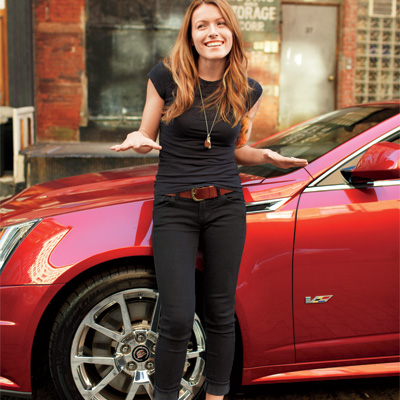 Veda Partalo and a Caddy. Together, they almost look like an advertisement. | Photo by Michael Edward
 The woman in my passenger seat says to kill the engine and restart it. I do, igniting a deep humming gurgle that crescendos, enveloping us in the reverberating neigh of 556 supercharged horses. The dials go green. The needles flutter past the redline. My audio-somatosensory experience has been fine-tuned to elicit maximum dopamine release, to provide an experience so radically unique that I might see an ancient thing in a modern light--even something as fossilized as the 110-year-old "Standard of the World," that old floaty boat, the Cadillac.
"I wanted you to experience that," says my passenger, 28-year-old Veda Partalo, planning director at Minneapolis-based Fallon, the ad agency tasked with completing Cadillac's decade-long makeover. It was proof: The car whose blinker your grandfather left on for miles--the car overtaken by Mercedes-Benz in the '70s, by BMW in the '80s, and by Lexus in the '90s, when rising prosperity meant rising demand for foreign stuff--is gone.
The new line, evolving since the 1999 Escalade, is beautifully tricked out. But in the car-selling business, particularly the luxury market, mechanics are not enough. Everything is shiny and fast. So Caddy has a unique marketing challenge: How do you shed the old stuffy image that brought it down 40 years ago and yet retain the thing that once made it great?
Creativity Versus Ideas
On Thursday and Friday, I spent most of my time dealing with a very random, unnecessary medical issue brought on by accidentally inhaling a tiny particle of a Clif bar. As a result, I missed collectively 7 hours of work, spent $200+ on co-pays and questioned whether or not everything does, in fact, happen for a reason. In the end, I can say that I legitimately gained a new appreciation for the very act of breathing and was reminded of how much I love being alive. Okay. So it wasn't a total loss.I'd like to say that it put my ongoing problems in perspective, but of course they quickly reared their ugly head. I'll just say that a career change, recent school and various moves back and forth across the country does not help ones bank account.
 That night, armed with a glass of red wine, I managed to tackle my in progress novel with gusto. Somehow, the frustration of the last two days, coupled with the fermented juices, got my creative juices flowing. How does one channel those near manic bouts of creativity without experiencing recent pain? J.K. Rowling created a masterpiece of an imaginary universe while desperately trying to support her family. It is commonlyknown that countless legendary artists and writers were alcoholics, depressed and experienced great tragedies in their lives. I just finished watching an episode of Californiacation where the writer, Hank Moody, spends most of his time avoiding writing until he seems he has hit rock bottom and the only way he can rise from his situation is by writing.
In Steven Johnson's latest book, [amazon_link id="1594487715" target="_blank" container="" container_class="" ]"Where Good Ideas Come From[/amazon_link]," Steven notes that the Age of Enlightenment began when people stopped drinking alcohol during the day, and came together in cafes to drink tea and coffee. Great progress came from the exchange of ideas between people of various backgrounds. How does the development of "good ideas" differ from the creative works produced during the Renaissance? Whether we're creating art or solving problems, great work comes when we let ideas slide through our brains, unfiltered.
As strategists, perhaps we're not the Da Vinci's, Michelango's, or Rafael's of the world, but rather, the Newton's, Franklin's and Jefferson's of the world. So find a scientist, an artist, a writer, an engineer, and maybe an architect and grab a cup of coffee.
Too Many White Men?
During my internet travels, I recently came across this great blog, Pretty Little Head by the planning director of Digitas New York, Farrah Bostic. Her recent post containing a list of inspiring women in technology and advertising. I've already worked with at least two people on the list and hope to work with more. Have you had the opportunity to learn from any of these women? Click here for original post.
Creatives
- Mary Beth Adduci, Creative Director, DDB Chicago
- Susana Albuquerque, Creative Director, Lowe Lisbon
- Sofia Ambrosini, Partner Creative Director, WLF Milan
- Suzanna Applebaum, ECD, Strawberryfrog
- Federica Ariagno, ECD, AUGE Milan
- Rosie Arnold, Deputy ECD, BBH London
- Vicki Azarian, Group Creative Director, OgilvyOne
- Sarah Barclay, ECD, JWT
- Kim Bartkowski, Group Creative Director & Creative Lead – Mobile Practice, Digitas
- Mariandreina Behrens, Creative Director, Vapro
- Serena di Bruno, Creative Director, 1861 United
- Katrien Bottez, Creative Director, Duval Guillaume Brussels
- Rebecca Carrasco, ECD, Colman Rasic Carrasco
- Tobi Carvana-Moore, Associate Creative Director, Matlock Advertising & PR
- Chiara Castiglioni, Creative Director, McCann Italy
- Janet Champ, Creative Director/Writer, Switzerland
- Fiona Chen, Creative Director, Ogilvy Shanghai
- Valerie Cheng, Executive Creative Director, JWT Singapore & XM-Asia
- Marian Cohen, Creative Director, Inbar Merhav Shaked Tel Aviv
- Vida Cornelious, VP Group Creative Director, GlobalHUE
- Susan Credle, CCO, Leo Burnett
- Augusta Duffey, Freelance Creative Director
- Katerina Esslin, Creative Director, Olympic DDB Athens
- Isabela Ferreira, Associate Creative Director, Energy BBDO
- Paola Figueroa, Creative Director, Ogilvy Mexico City
- Marie-Claude Garneau, Global Creative Director, DDB WW Paris
- Helene Godin, Creative Director, Sid Lee Montreal
- Alison Gragnano, Global Creative Director, Saatchi NY
- Carolyn Hadlock, Principal/Executive Creative Director, Young & Laramore
- Nancy Hartley, Joint Executive Creative Director, Sapient Nitro Brisbane/Sydney
- Frances Hatzipetrou, Creative Director, Fortune Athens
- Barbara Hernandez, Creative Director, BBDO Mexico
- Susan Hoffman, ECD, Wieden + Kennedy
- Jennifer Hu, ECD, Ogilvy Taipei
- Heather James, Director of Learning Services, Acquio Ireland
- Maria Carolina Jaso, Creative Director, ARS DDB
- Judy John, Managing Partner & Chief Creative Officer, Leo Burnett Toronto
- Laura Jordon-Bambach, ECD, LBi London
- Linda Kaplan Thaler, CEO/Chief Creative Office, Kaplan Thaler Group
- Pamela Kaplan, Creative Director, BADJAR Ogilvy Melbourne
- Kerry Keenan, Global Director Creative Content, Y&R
- Kris Kiger, SVP, Managing Director Visual Design, R/GA
- Elke Klinkhammer, Creative Director, Neue Digitale
- Tiffany Kosel, VP Creative Director, Crispin Porter + Bogusky
- Becky Kozlen, Creative Director, DDB Chicago
- Natalie Lam, ECD, OgilvyOne Shanghai
- Jodi Leo, UX & Design, The Barbarian Group
- Elspeth Lynn, ECD, Profero
- Gerry Killeen, Managing Director-Creative Services, Kaplan Thaler Group
- Amy Markley, Creative Director, Tom Dick & Harry
- Kammie McArthur, Group Creative Director, Publicis West
- Suzanne Molinaro, Deputy Head of Interactive Production, BBH
- Charlotte Moore, Creative Director/Art Director, Switzerland
- Monica Moro, ECD, McCann Madrid
- Judite Mota, ECD, Y&R Lisbon
- Mehera O’Brien, Creative Director, AKQA New York
- Eleftheria Petropoulou, Group Creative Head, McCann Athens
- Christine Pillsbury, Creative Director, Beam Interactive & Relationship Marketing
- Suzanne Pope, Creative Director, John St Toronto
- Claudia Portela, Creative Director, Y&R Lisbon
- Katja Rickert, Creative Director, Scholz & Volkmer
- Fernanda Romano, Global Creative Director – Digital & Experiential, Euro RSCG
- Consuelo Ruybal, Creative Director, Kaplan Thaler
- Mariana Sa, Global Creative Director, DM9DDB Sao Paulo
- Catherine Savard, Creative Director, Cossette Montreal
- Bibiana Segura, Creative Director, Global Link Communications
- Jennifer Shreve, Creative Director, Razorfish
- Stefania Siani, ECD, D’Adda Lorenzini Vigorelli BBDO Milan
- Liz Sivel, Creative Director, R/GA London
- Eloise Smith, Creative Director, Euro RSCG London
- Nina Thelberg, Creative Director, B-Reel Stockholm
- Marianella Torres, Creative Director, TBWA/Venezuela
- Elizabete Vaz Mena, Creative Director, Grey Lisbon
- Isbelt Venegas, Executive Creative Director, Publicis
- Gabrielle Weinman, Group Creative Director, Ignited LA
Strategists & Media Mavens
- Ingrid Bernstein, Digital Strategy Director: Experience Department Head, JWT
- Farrah Bostic, VP Group Planning Director, Digitas
- June Cohen, Executive Producer, TED Media
- Mimi Cook, Director of Creative and Brand Strategy, Mekanism
- Emma Cookson, Chairman, BBH New York
- Mel Exon, Managing Director, BBH Labs
- Amber Finlay, SVP Global Engagement Planning, Arnold Worldwide
- Robin Hafitz, Founder, Open Mind Strategy
- Brenna Hanly, Mobile Strategist/Catalyst, Mullen
- Katie Harrison, Head of Planning, BBH New York
- Sarah Hofstetter, Senior Vice President: Emerging Media & Brand Strategy, 360i
- Natasha Jakubowski, Managing Partner/Head of Innovation, Anomaly
- Kristen Maverick, Digital Strategist, BBDO
- Kate Miltner, Masters Candidate (Media & Internet Memes), London School of Economics
- Alli Mooney, Head of Trends & Insights/Marketing, Google
- Jaime Morelli, VP Account Director Media Planning, Zenith Optimedia
- Kelly Stoetzel, Content Director, TED
- Amelia Torode, Head of Digital Strategy, VCCP London
- Lindsey Weber, Social Media Lead, The Barbarian Group
- Alisa Leonard, Director of Experience Planning, iCrossing
- Judith Lewis, Head of Search, Beyond
- Constance DeCherney, Director of Strategy, iCrossing
- Shoshana Winter, SVP Marketing Strategy, iCrossing
- Shelby MacLeod, Group Director of Earned Media, The Barbarian Group
- Sarah Watson, Chief Strategy Officer, BBH New York
- Sarah Wulfeck, Director Content & Community, Beyond Consultancy
- Shelley Zalis, CEO, Ipsos Open Thinking Exchange
- Jennifer Zeszut, Social Strategist, Lithium (ex-CEO of ScoutLabs)
Creative Technologists
- Mary Flanagan, Founder, techARTS & Professor of Digital Humanities, Dartmouth University
- Tracy Fullerton, Head of Interactive Media Lab, USC
- JC Herz, Author, Joystick Nation
- Katherine Isbister, Professor/Head of Game Design Program, NYU-Poly
- Colleen Macklin, Fellow, USC
- Joanne McNeil, Sr. Editor, Rhizome
- Katie Salen, Professor, Parsons MFA
- Amanda Steinberg, Founder, Daily Worth
- Amy Stettler, VP Global Media & Engagement, Activision Blizzard
- Zeynep Tufecki, Asst. Prof of Sociology, University of Maryland
Marketing & Client Service Leaders
- Amanda Bird, Director of Marketing, Innovation Interactive (360i – IgnitionOne- Netmining)
- Susan Canavari, EVP Marketing, Digitas
- Eva Heyman, Managing Director, Digitas Health
- Lynn Lewis, EVP Global Managing Partner, Universal McCann
- Robin Koval, President, Kaplan Thaler Group
- Linda Piggot, EVP Marketing, Digitas
- Tracy Reilly, VP Group Director, Digitas
- Laila Schmutzler, Brand Director, Stag & Hare
- Stephanie Smeriglio, Executive Director Account Services, The Barbarian Group
- Andrea Sullivan, Executive Director of Client Services, Interbrand
- Joanne Zaiac, President NY Region, Digitas
Entrepreneurs
- Morra Aarons-Mele, Founder, Women Online
- Jenna Arnold, Founder, Press Play Production
- Anita Black, Co-Founder, The Magnetic Collective
- Leslie Bradshaw, Co-Founder, JESS3
- Carri Bugbee, Founder, Big Deal PR
- Diane Cook-Tench, Founding Director, VCU Brandcenter
- Kat Egan, Founder/CSO, Exopolis
- Sarah Fay, Free Agent, (ex-CEO Isobar & Aegis, ex-President Carat)
- Cindy Gallop, Founder, If We Ran the World & Make Love Not Porn
- Teresa Edleston, Co-Founder, The Magnetic Collective
- Emily Gannett, Founder, IRL Productions
- Liz Gumbinner, Founder, CoolMomPicks.com and Mom101, SVP Group Creative Director, Deutsch
- Emily Hickey, Co-Founder, Hashable
- Sara Holoubek, CEO & Founder, Luminary Labs
- Sonja Jacob, Founder & Chief Creative Officer, The Cultivated Word
- Nina Lalic, Founder, Brief Agency
- Alessandra Lariu, Co-Founder, SheSays
- Andrea Learned, Founder, Learned On LLC
- Holly Lynch, Founder, The Good Girls
- K.D. Paine, Founder, KD Paine & Assoc.
- Vivian Rosenthal, Founder/CEO, GoldRun and Tronic
- Elizabeth Talerman, CEO and Managing Partner, Nucleus Branding
- Jureeporn Thaidumrong, Owner & Creative Chairwoman, JEH United Bangkok
Advocates & Change-Makers
- Tiffany R. Warren, Chief Diversity Officer, Omnicom & Founder, ADCOLOR
Brand Marketers
- Beth Comstock, SVP/CMO, General Electric
- Rebecca Messina, VP Global Marketing Capability & Integration, Coca-Cola
- Jill Simmons, Marketing Director, The New York Times
- Julie Washington, VP & General Manager – Consumer Products, Jamba Juice
- Connie Weaver, CMO, TIAA-CREF
- Andrea Harrison, Director of Digital Engagement, Pepsi
All Art Is Advertising?
As someone who's slightly obsessed with Italian art history, I found these two videos via Agency Spy extremely informative and entertaining. The case studies, presented by a team of students at VCU Brand Center, explore how famous Italian artists were commissioned to create art in response to various problems the country was facing - like declining birth rates due to obesity and lack of popularity of the Vatican. I'm really curious to know where they got their facts. I can understand how they compiled an increase in birth rates but number of people praying in the Vatican? Wow!This really makes me think about the similarities between commissioned art and advertising. Is there really a difference? Were commissioned artists really the first art directors? When you look back in history, commissioned European art contained symbolism. It was a vehicle for the wealthy to advertise their position in life through their clothing, background, and even the paints that the artist painted with. Italian art is saturated with images that teach people how to behave. The interior of the Florentine Duomo, partially painted by artist and first art historian Giorgio Vasari, depicted graphically violent and sexual images of hell, warning Florentines what would happen if they misbehaved. But the images are so graphic that you wonder whether sexually charged or violent movies and shows like Skins, True Blood, etc. are really a deviation from the type of content humans have always been exposed to.


Speaking of the past influencing the future; architects originally had trouble figuring out how to create the dome and held a contest, open to architects to solve the problem. Were the commissioners of the duomo, the Arte Della Lana, the first to crowd source for a creative solution?
And finally, going back to Leonardo Da Vinci's Vitruvian Man - it's interesting to see how despite being surrounded by images of beautiful, thin people in the media, Americans are fatter than they ever were and despite knowing that obesity effects fertility, productivity, and our general well being, no amount of perfectly toned, beautiful people in advertising seems to have any effect on our national obesity epidemic. Maybe instead of just writing about the obesity epidemic, we need more advertising to convince people how to eat and exercise, a la the anti-smoking campaigns of the past.

I leave you with the two videos below. Enjoy!
[youtube=http://www.youtube.com/watch?v=-oo7_eFftuM&w=100&h=100]
[youtube=http://www.youtube.com/watch?v=0daisveY5wM&w=100&h=100]
PSFK Video on Account Planning
