How to Make It In New York City

Last week, I reentered the unpredictable world of strategic consulting. I'm excited to work with clients across various verticals and disciplines, conducting research and providing both insights and strategic direction to impact their business and help them better engage with their consumers. It's increasingly apparent that a full time position only offers the illusion of stability in today's economic climate. In fact, every time I get LinkedIn updates from my network, half the updates show that someone has gone freelance; whether by choice or layoff, I cannot say. I'm sure universal health coverage will accelerate this trend. A recent New York Times article pointed to a Gallup study that found
"Among the 100 million people in this country who hold full-time jobs, about 70 percent of them either hate going to work or have mentally checked out to the point of costing their companies money — “roaming the halls spreading discontent,” as Gallup reported. Only 30 percent of workers are “engaged and inspired” at work."
While a full time position can offer (often) measly health benefits and the continuity of working with the same colleagues and clients, employees start to get too complacent, failing to maintain their network and nurture their reputation outside the company. And then they find themselves on the chopping block, without an updated resume or wealth of contacts to help them land their next gig.
So after surrounding myself with successful people, absorbing any hearty advice I come across and attending as many educational events I can fit in, I've narrowed down a few rules for becoming a successful consultant or protect ourselves from a lengthy unemployment. Through social media especially, we have the power to shape our own brand, so that if we do end up on the chopping block, we have enough contacts, credibility and experience to turn that snafu into an opportunity.
1. Solidify and properly convey your story. Everyone you come across wants to understand where you came from in order to better connect. Figure out what makes you tick - and how those insights led to where you are now. My story is that I've always had a deep fascination with people from the time I was in high school, taking advanced life-drawing classes, to a long history of street and portrait photography. I translated this passion into consumer insight-driven strategy, working with brands to better understand their consumer's motivations and habits to grow their business. Michael Margolis from Get Storied, believes that often something that happened when we were between 8-10 years old shaped who we are today. Growing up in a bi-religious household, in an ethnically diverse town shaped my fascination with people and their cultural influences. Yearly trips to an American enclave in the middle of Mexico solidified this interest.
2. Establish your credibility. As the return of investment of MBAs increasingly come into question, entrepreneurs have sought new forms of establishing credibility among their clients. First and foremost, be authentic and honest in your business dealings. Put 200% into every client you work for and only do your best work. Extend the brand of you through speaking engagements, teaching (Skillshare), public presentations (Slideshare), writing articles and working with respected clients. Document your achievements and get permission to publish any positive client feedback.
3. Grow your network. Relationships are the glue that hold a successful career together. A strong network can offer mentorship, job opportunities and emotional support to navigate ones career. When we are passionate about our career, we find genuine connections with people in our industry. Maintain these connections regardless of your current employment status and make sure to give back or pay it forward. I have had the good fortune to have numerous people help me along the way. The best way to reward a mentor is to immediately incorporate their advice and achieve success doing so. The knowledge that they made a positive difference in someone's life and will pay it forward, is reward enough.
What advice have you been given that's been critical to your success?
Molly Aaker's Guide to Life: Job Stuff
Hey there! You may remember me as that lady who used to post more than once every few weeks. Well.. things have been a bit crazy. For a brief while I was actually freelancing at two places at once. I supposed when it rains, it pours. Seriously. It was pouring. On top of that, I was looking for a new apartment, finally ready to settle after two years of subletting and moving around. I had to make so many decisions over the last few weeks that at some point I probably just mentally shut down - gave in and just watched funny cat videos - or something like that. It seemed like every decision I've had to make from where to live to what kind of bedding to buy took f%*king work. I mean seriously, isn't the internet supposed to just magically give us the information we need, when we need it?! Well. I've got news for you. It doesn't.
So over the next few days / weeks / months, I'd like to share what I've learned. Hopefully so ya'll won't have to go through the same thing. Although even if you do, there's no doubt you'll learn something.
Lesson 1: I started a new job. This is beyond exciting. Not only am I working with cool/smart people, finally have a steady paycheck and eventually health insurance, but I'm in a growing field. I'm a strategist at a mobile media agency. Don't ask me to explain this because honestly, the possibilities are endless. So what have I learned? Well... coming from the advertising side, I'd say we can be pretty judgmental about various aspects of the advertising process. Creatives might roll their eyes at account people whereas account planners may scoff at the idea of working for a media agency. But guess what, we're all just cogs in the wheel (just kidding). What I meant to say was - the more we know about each others' roles, the better we'll be. Especially in an area that's still being defined. While I'm still learning the ropes, the experience so far has been invaluable. I work with results oriented, left-brained Excel wizards who get excited about "branding" whereas I'm finally learning the true meaning of ROI.
SO the lesson learned is; be conscious of where your next job can take your career but also don't be afraid to try the off beaten path. So many recruiters want candidates that are wrapped up in a neat little bow with a few years of big agency experience, etc. but there is an undefined world out there to explore. This world straddles technology and startups. It embraces both cultural diversity and those coming from different careers. And recognizes that a person doesn't need to have performed the exact job to excel. Find these companies. Find the hiring managers who will recognize and appreciate your intelligence and then go for it. Dive in. Help to define the process, to grow the company and to incorporate a different perspective into their business. You'll both be the stronger for it.

Tête-à-Tête Tuesdays with Molly
 Rupert Newton has worked as a creative strategist, with an expertise in communications planning in the marketing and advertising industry for nearly 20 years. After developing his career in the UK, Rupert brought Michaelides & Bednash's pioneering communications strategy approach to America. He co-founded a marketing strategy company called The Joneses, pairing brand and communication strategists to work with HBO, NBC Universal, Diageo, Virgin Atlantic, and a plethora of other notable clients. Most recently he has focused his energy on facilitating a different kind of growth, that which comes out of the ground, as part of an organic farm cooperative, Newton Farms, in the Catskills.
You've worked as a planner both on the media and brand side for almost two decades, bringing breakthrough ways of thinking and planning. How do you see young planners doing that today?
I think the role of young planners is to challenge conventions, rules and any formulaic process they are handed. Strategy is a creative exercise, it should be about open free-thinking while you immerse yourself in the topic, bring new cognitive models in when you've noodled around for a while. Read books on recent advances in psychology and neuroscience. Cultivate creative interests outside of work. I think if I'd really focused on articulating an insight, and the subsequent idea, very clearly and simply, it would have helped me earlier on. It's a fantastic discipline. The worst thing any planner can do is complicate things. Think practically about how to bring the creative strategy to life in the real world. Whatever it is would you participate in it? If not, it's probably crap.
What planners, agencies, blogs or activities inspire you?
Oh, hmmm, I was just reading Caught by the River, I think Fact Mag is great, I just read Infinite Realities which was fascinating, the other day I went to see Douglas Rushkoff speak, last weekend was Unsound in Brooklyn so lots of deep sub-bass action, I've read the Guardian for over twenty years, amazing to think it used to circulate less than 400k copies in the UK as a newspaper, and now has nearly 40 million readers digitally ...I started as a media buyer and used to take the piss out them for only being read by teachers and social workers (obviously I didn't say I was a loyal reader), so all I'll say is there are 40 million sandal-and-socks wearers in the world, (myself excluded).
I recently read [amazon_link id="1604443499" target="_blank" container="" container_class="" ]Homage to Catalonia[/amazon_link], there is a funny moment where the Fascists and the leftists are entrenched opposite each other on a steep gorge, just too far for anyone to shoot accurately. So for weeks they resorted to hurling insults back and forth, except for one enterprising leftist who would use a megaphone to soothingly say things like, "Buttered toast...we are sitting down to delicious slices of buttered toast". Of course they were not, they barely had any rations or firewood, Orwell archly credits this man with persuading conscripted Facists to desert. Probably went on to be Spain's top PR man...
You recently started a farm cooperative in upstate New York that grows organic vegetables. What made you decide to open the farm?
I grew up in rural England, my Dad was a forester, conservationist and musician. I also worked on dairy farms as a teenager, so I've "got form" as the British cops say in reference to a suspect's previous convictions. Then in 2010 I reached a point in my life where a few things fell apart and a few other things just fell into place. Overall I'd say it was just seizing an opportunity that presented itself and running with it. I've become very interested in "biological farming" a system for farming with a deep understanding of the ecosystem, that restores soil health while producing the best quality crops. You can read about it here, Remineralize the Earth.
Planners like to talk about human truths. It's a human truth that what we eat shapes our bodies, lives and culture. What insights about your own life have you discovered from organic farming?
Taken at face value most people think about rural life as a fantasy escape, as the anti-thesis of wired urban life. But the connectivity of nature is a metaphor for the internet, or vice versa, nature is electrically charged and vibrational, so more similarities than you might think. Nature was "connected" a long time before we were digitally, something the ancients used to understand very well. Did you know a single plant can move nutrients from up to 100' away? Did you know you can measure the electrical conductivity of soil and this will tell you how efficiently nutrient transfer is operating between soil life, bacteria, fungi and plants? I know someone in the midwest who pipes ambient techno into his greenhouses and swears the plants are havin' it. For me all this just confirmed what we always knew, that everything is just part of a larger whole.
As an organic farmer, you are going back to nature and essentially embracing simplicity, slow food and an older way of life. But as a planner in advertising, you are part of the fast moving cycle of consumerism. How do you balance these two worlds? Are they more alike than one would think?
Haha, I completely reject your first point, I think you're stereotyping there. Naughty planner! Organic is problematic in that I think it conjures up fantasy imagery of bucolic Thomas Hardy-esque farms, and, I think the organic movement plays up to it as a persuasive sales technique. Personally I question the smug middle class milieu of the farmers market, I find the organic food as luxury product/status symbol off putting and limiting. Long term I hope to be part of the change that makes quality, non-chemical, bionutrient-dense food sold in Walmart. I see this as progress, not "going back" or "an older way of life", why would anyone want to do that? There was no health care and people died young, often in excruciating agony.
Yes, I was stereotyping. What is your ultimate goal for Newton Farm Cooperative? What change would you like to see? And what's your strategy for trying to achieve it?
Well, it's a cooperative so it's a shared goal. If only I'd grown up reading the Daily Telegraph, it would be so different..
Finally, all this food talk is making me hungry. Where can we find the food grown at Newton Farm Cooperative and how can we get involved?
We'll be supplying The Meatball Shop on the Lower East Side, and any new locations they open, Diner, Five Leaves, Dressler, Marlow and The Bedford in Williamsburg, Two Boots pizza's downtown locations, there'll be others too. We'll get pretty busy with the Facebook and Twitter when the season starts so you can fan or follow for updates and contact us there.
We have a special deal this season, give us 5 hours of work and you get one free night's stay at the farm. It's a beautiful old farmhouse in a high mountain valley near Phonecia. We even have a recording studio in one of the barns, so you know, it might get loud.

The Big 3-0 Is Here


 Lesson 1: Trust your instincts. Jobs are like relationships; if you have a sinking feeling that things aren't working, it's probably best for you to move on out or else you might be left standing on the curb (or at Whole Foods eating sushi and a cupcake by yourself on your birthday).
Lesson 2: Leave with dignity. I can proudly say that when I was laid off, I did not shed one tear and although I was shocked, I also felt relieved.
After celebrating my birthday with a great group of friends, I dove straight into the job search the next day. I updated my resume and emailed my contacts, even people I babysat for. Knowing that I couldn't just sit by the phone, I did everything I could to refine my online presence and volunteered my time with advertising organizations.
Lesson 3: Dive head on into your job search and don't be afraid to gracefully share with friends and former colleagues that you were laid off and are looking for work.
Lesson 4: Everything you do should be done well, from side jobs like babysitting to, of course, your full time job.
Less than two weeks later, I had one of my first informational interviews with a planning director who told me to go to Miami Ad School. In fact, I was introduced to him through a babysitting client. I took his advice and spent the next few months putting together my application. At the same time, I attended every networking, advertising and tech event I could hoping that my knowledge of the NY tech scene would help me with my job search.
Lesson 5: You make your own luck.
When I told people I was going to San Francisco for school, they told me that I was lucky. Actually no, I don't think getting laid off on ones birthday, having my kitten jump out of my fifth floor window to his death, and not finding my true career path until 28 makes me lucky. But I do think that being kind, pro-active and resilient has helped in things finally turning around.
Lesson 6: You only live once and life is short so don't put off big decisions like going back to school. There's a famous tag line that sums up that sentiment up nicely.
Just do it.
At some point, the prospect of moving across the country and uprooting my life scared me. What if I didn't get into the program? What if everyone was smarter than me? Was it crazy to take out a $6K plus loan? Put all my belongings in storage? But once I got into the program and worked my ass off, I realized I should apply to every opportunity given to me. My time should be spent having my mind blown away on a nearly daily basis and I should be surrounded by people I admire and respect. And right now, I am.
Lesson 7: You never know what the next day will bring and it only takes one "yes."
When I went back to San Francisco after the holidays, I spent most of my time stressed about trying to find a job instead of enjoying my surroundings. I don't regret that and think my time was well spent, but it was quite the emotional roller coaster. I continued to keep in touch with all my contacts and then it happened, someone said "yes," and without hesitation, I packed up my things and headed back to New York.
Lesson 8: Never underestimate the importance of kindness.
I sometimes think that I'm too nice and not strategic enough in my dealings with people. I'll accept a Facebook request for fear of hurting someone's feelings or offer up job advice that I spent months trying to figure out for myself. But I realize there's without a doubt an incredible importance to being nice and honest. Unfortunately, not everyone expects it! And I'm now surrounded by very successful people who I believe share that same philosophy. I may not be able to directly help those who have helped me, but I am happy to "pay it forward" to others.
And that pretty much sums up my thoughts for now. What did you learn after turning 30?
Tête-à-Tête Tuesdays with Molly
I am excited to introduce Stephanie Retcho, Managing Director at TBWA/Chiat/Day. I won a lunch and industry chat with her through AWNY’s yearly silent auction hosted by their Young Executive committee and she was kind enough to share her insights and expertise.
What’s your background?
I've been working in advertising for more than 15 years now. I started out on Bell Canada at Leo Burnett in Toronto and then moved to New York. I've worked on everything from The Ford Motor Company and Jaguar to Nextel, Sprint and Verizon Wireless, and now touching many brands at TBWA\Chiat\Day in New York. I also did a stint as a client at Sirius Satellite Radio.
I graduated with an Arts degree and began work in travel and later as a copy writer for a software development company as well as an editor for a small publisher in Toronto before getting into advertising.
How would you describe the difference in culture and experiences between working for a smaller agency or medium sized versus a larger firm?
Both have strengths and weaknesses. While larger shops generally have greater resources and infrastructure, smaller shops most often allow for more innovation. Culturally, either can be entrepreneurial if you have the right drive. It's a matter of having a vision for the agency and for your clients.
What are some important skills and ways of approaching situations to be a successful account manager? Or advice on collaborating with a group of people in a professional environment?
There are two fundamental skills at the core of everything an account person does. These were synthesized for me by a mentor and they still apply today - be a leader and know your client's business. You need to have a genuine interest in understanding what your client does and how to sell it to others and you need to have the chops to get in front of things and try to solve them. If you don't want to pick up the phone and address a situation that needs to be addressed, don't be an account person.
In addition to these two base level strengths, you also need foresight to know what needs to happen next, and the ability to view situations laterally and understand what is going on around you that will impact what you are doing.
Where do you see advertising going in the next five years? Will print and television ads still be relevant?
I have to go against the common trend today and say that TV will still be a very powerful medium. I think print already has, and will continue to, transition to being the written word in alternate media, but as much as people say the :30 second spot is dead, it continues to be one of the most impactful media options that exists. I think the key to the future will be about the connection between TV and other media. There are wonderful examples of TV inspiring incredible work in other media and great business results, like the recent work from Old Spice.
And finally, you’re sitting across from a potential candidate in an interview. You’ve decided that you’re gong to hire him/her. What are the top three things they did that got them the job?
The most important quality to me in a candidate is the ability to engage in a non-rehearsed way on the spot. If I ask a question, I don't want to hear a canned response. I want to hear what you think and see you have a new idea, in front of me. That can't be rehearsed. Beyond that, what I don't want to hear is that you think being an account person is a facilitation role. We don't facilitate - we lead.That's not 3, but that's what I look for.
College degrees that don't pay
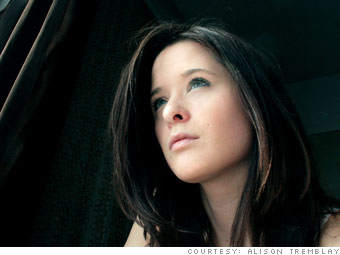
It's not a pretty picture out there for fine art majors, with many graduates still looking for work or squeezing by on measly pay.
Alison Tremblay, an art major with a photography concentration from Alfred University, wasn't getting by on income from freelance photo gigs and was forced to take a job in data entry.
"[It] pays the bills but it's not what I want to be doing at all," she said. "But since I can't find a full time job in my field, I'm stuck doing this until I make enough money to support myself."
But despite the struggle, Tremblay says she wouldn't have picked a different major.
"I guess I wish I had taken more practical courses like business, but I couldn't imagine not majoring in art and not having a camera in my hand," she said. "I'm just trying to take my skills and turn them into something where I can actually make money -- that's the real struggle."
Link to AWNY Presentation
As promised, here's a link to Regina Angeles fantastic AWNY presentation on How to Use Social Media to Enrich Your Job Search and Enhance Your Professional Reputation.

Self Reflection and Discovery
For the last few weeks I've been doing lots of soul searching regarding my career and the wonderful world of advertising/ photography. I still love both industries.. but.. have gotten really into digital marketing. In fact, I tend to jump from one interest to another and have been known to do so throughout my whole life with gusto. Growing up, I enjoyed art classes, ice skating lessons, running, biking, creating and selling beaded jewelry, photography, volleyball, softball... and the list goes on. The epitome of a jack of all trades. I suppose I should add writing to that list. Lately I've started to wonder whether or not my vast array of interests is the result of ADD. Unfortunately, my lack of focus can't be solved with a pill according to a very intelligent Park Avenue psychiatrist that I recently visited. He theorized that I don't trust my own decisions and over think things. I felt this was an accurate assessment, although like Oprah preaches, I have learned to "trust my own instincts" more often.
Despite his assessment, the direction of my career has been bouncing around in my head like a fast moving ping pong ball. Last weekend I researched getting either a masters or MBA. See, I can't even start moving forward until I figure out what test to take! Unsatisfied with my research, I looked to a higher power. No, not God, although I did briefly pray in my head for him to give me direction - but the Myers Briggs Type Indicator (MBTI). Eureka!
The test revealed that I'm an ENTP = (Extraversion, iNtuition, Thinking, Perception) and re-enforced some of my own assessments but now I know how to harness my personality traits. Like for instance, it said I like generating ideas but not following through with the day to day. Check. Loves constantly learning new things and apt to move on to the next activity once mastered a skill. Check. And obviously the list go on and on but I now have a specific direction for my career. (It's a secret) I'm excited to learn that fellow ENTP's include: Walt Disney, Thomas Edison, Lewis Carroll, Alfred Hitchcock, John Malkovich, Nikola Tesla, “Weird Al” Yankovic, Benjamin Franklin, and Richard Feynman so along with sharing a birthday with Leonardo Da Vinci, I better eventually do something amazing! I wonder if your birth date and sign actually do have an effect on your personality because lots of the qualities for Aries coincide with the traits for an ENTP but then again, only 3% of American are ENTP's while obviously a much larger percentage share my Zodiac sign.
Anyway, I now feel like I can sleep at night.
And on that note. Good night!
Career DNA Test
I'm going to take a moment to disregard the moral implications of this test and ask: Where the hell can I get it??!!
http://i.cdn.turner.com/cnn/.element/js/2.0/video/evp/module.js?loc=dom&vid=/video/world/2009/08/04/chang.china.genetic.gifts.cnnEmbedded video from CNN Video